

What should you know before ordering beer kegs?
You're organizing a birthday, a wedding, a housewarming. You want beer kegs. And then, your brain glitches: how many? When to order? How does this draft system thing work?
It's normal to freak out – that's exactly the question we get asked three times a week at the brewery. The good news: there are only three pieces of information that really matter for quantity, and three pitfalls to avoid to make sure everything runs smoothly on D-day. Master these, and you'll handle 99% of possible headaches.
The quantity depends on 3 criteria (and not just the number of guests)
Criterion 1 - The duration of your event
The basic rule, the one that works for 90% of cases: 1 liter per person. This is the standard calculation for a classic evening of 4 to 6 hours. 50 people? 50 liters. 80 people? 80 liters. Simple.
But this rule adapts to the actual duration of your event.
Short aperitif (2 hours maximum): Divide by two. Your guests have one or two drinks, chat, nibble, and leave. 40 people for an aperitif? A 20L keg is more than enough.
Night marathon (6 hours and more): Multiply by 1.5. When the evening gets going, people stay, the atmosphere builds, consumption follows. For 50 people who stay all night, plan for 75 liters - that's two 30L kegs plus one 20L keg.
Criterion 2 - The available keg formats
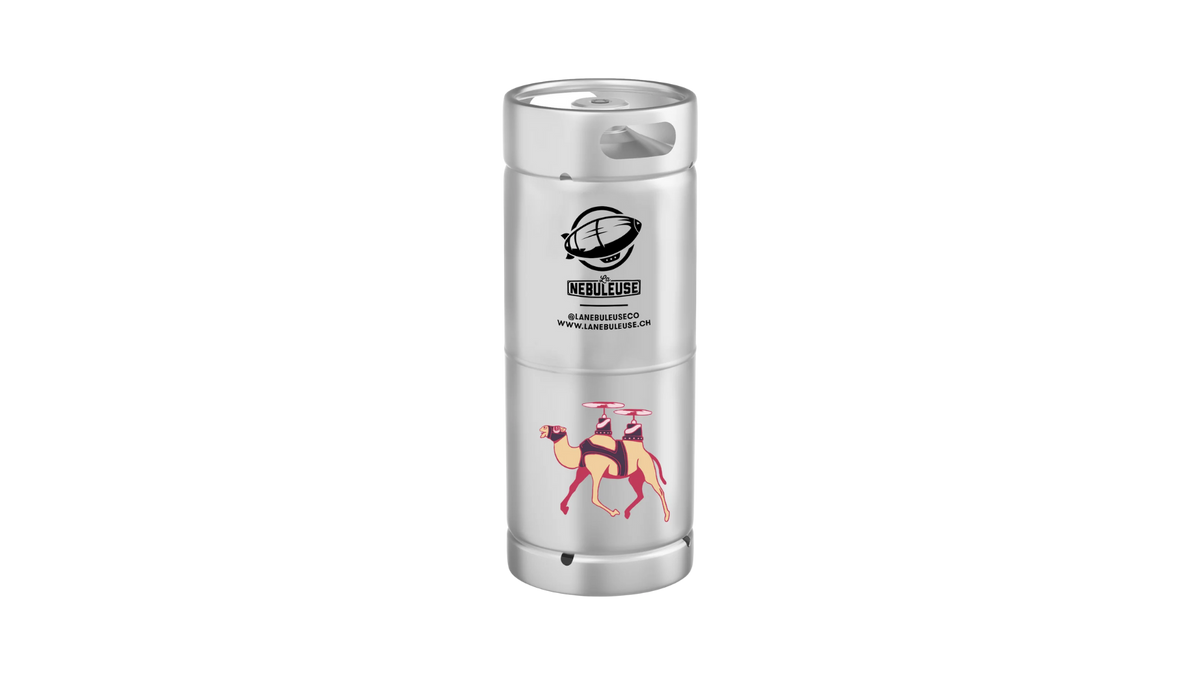
At our place, we only have one format: 20 liters. The yield calculation is direct. A 20L keg gives about 80 glasses of 25cl.
With an average consumption of 4 glasses per person over a standard evening, that means: 20L = 20 people. The "1 liter per person" rule therefore holds perfectly.
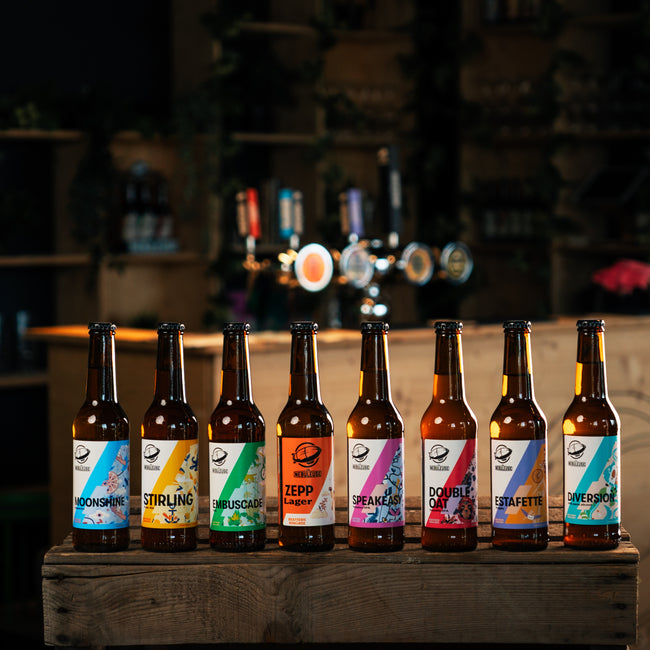
Our advice after hundreds of events: prefer several small kegs rather than one large one. Freshness is better maintained, you offer variety (a Zepp AND an Embuscade for example), you better manage volumes at the end of the evening, and you allow your guests to discover different aromatic profiles.

Criterion 3 - Other drinks offered
If you only serve beer, stick to the basic calculation. But if your event also offers wine, soft drinks, cocktails - which often happens - reduce your beer estimate by 30%.
Concrete example: you're expecting 60 people for a 5-hour evening. Basic calculation = 60 liters. But you also serve white wine and soft drinks. Adjusted calculation: 60 × 0.7 = 42 liters. Three 20L kegs perfectly cover the need, with even a small safety margin.
This calculation works because tastes naturally spread out - about a third of your guests will prefer something other than beer during the evening.
Three pitfalls to absolutely avoid
Pitfall 1 - Ordering at the last minute
Minimum 7 days before your event. This is the rule we apply for all keg orders. Why? Because we brew craft beer, with long fermentations that cannot be rushed.
Our production follows a precise schedule. Our beers go through long fermentations - for example, the Zepp ferments for several weeks in bottom fermentation. We cannot improvise a brew because someone woke up Friday morning thinking "hmm, I'll throw a party Saturday night."
Stock is inherently limited. If you order an Embuscade or a Double Oat three days before a long weekend, there's a good chance we'll be out of stock on these highly demanded items.
Bonus of lead time: you have time to ask us all your questions without stress. Draft system installation, serving temperature, beer choices based on your guests - we take the time to advise you properly when you're not calling us in an emergency.
Pitfall 2 - Neglecting storage temperature
Kegs must not exceed 25°C (77°F) before and during your event. This is non-negotiable if you want to serve beer correctly.
A warm or poorly stored keg is a guaranteed disaster. The foam explodes, making it impossible to fill a glass without overflowing. The taste becomes flat, the aromas dissipate. Your guests wonder what they're drinking, and you look like the one who messed up the supply.
A cool cellar at 12°C (54°F) is already too warm for optimal storage. If you don't have the storage capacity, it's better to order smaller formats or adjust your delivery schedule.
Pitfall 3 - Ignoring tap/keg compatibility
Not all kegs work with all taps. This sentence should be written in huge letters on all websites selling kegs, but no one does it. The result: one in three people calls us in a panic on Friday evening because the keg doesn't fit into their tap.
Questions to ask before ordering:
Is tap rental included? At our place, we offer free rental. If you order elsewhere, check this point - buying a compatible tap just for one event will cost you more than expected.

What pressure system? Some taps integrate a CO2 system, others have a compressor within the tap. To understand all about the settings according to beer style and tapping technique, our complete guide to beer tap rental details each step.
Is the connector type compatible? There are several standards. Our kegs use a common system, Type S, but we always explain exactly what equipment you need. No surprises on Saturday morning when you take your kegs out of the fridge.
In summary: if you master these points, you've got this
Ordering kegs isn't rocket science when you know the three important variables: duration, formats, other drinks. And the three mistakes not to make: too short a lead time, neglected temperature, skipped compatibility.
Master these six points, and your only stress on D-day will be whether Uncle Michel will tell his terrible jokes again. As for the beer, you've got it covered.
Cheers 🍻


