



Why is there a shortage of malting barley in Switzerland?
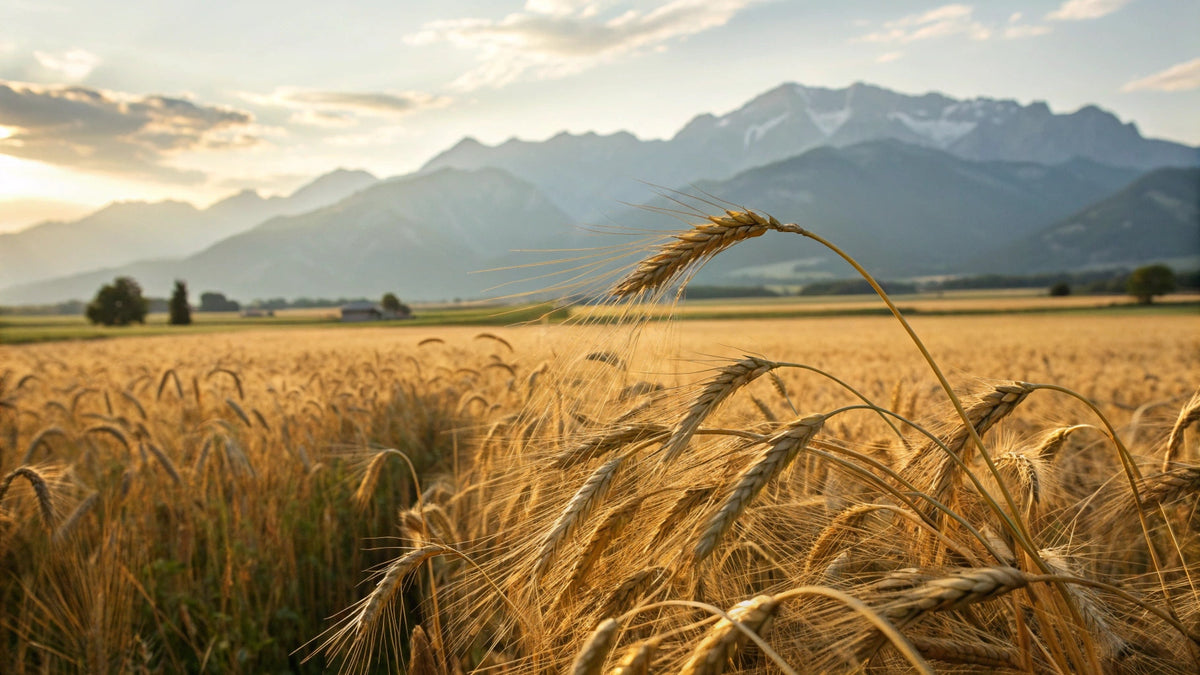
Over 1,000 breweries in Switzerland, and yet almost no one brews with Swiss barley. Surprising, isn't it? You'd think that with so many craft beer enthusiasts in the country, fields of brewing barley would be growing like hop fields in Bavaria.
Complete failure.
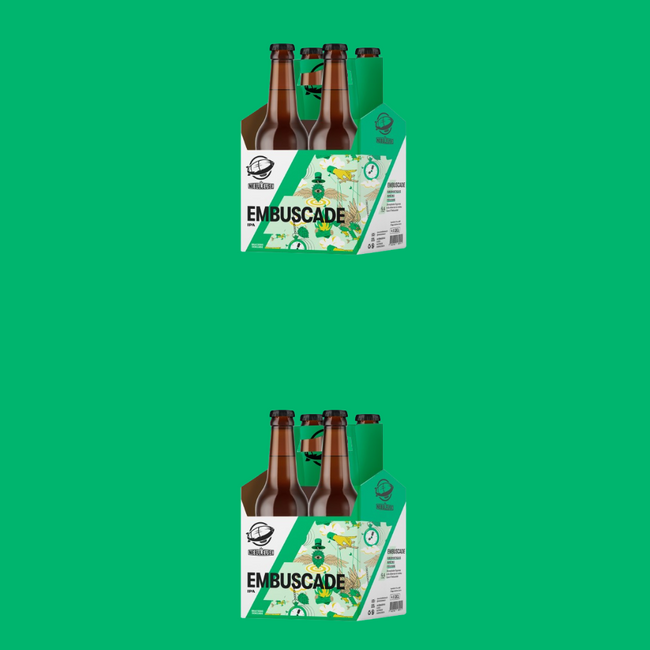
The reality is that 99% of the malt used in Swiss beers comes from abroad. Yes, even in beers that proudly display the Swiss Cross on the label. Because "Swiss beer" doesn't mean "Swiss barley." It just means someone brewed it somewhere between Geneva and St. Gallen. And we at La Nébuleuse are part of that club. Our malt comes from Bavaria. Not because we lack the desire to brew locally, but because the reality on the ground is far more complex. To brew an Embuscade that wins a European Beer Star award, you need a consistency that you can't yet find in Switzerland.
This isn't a conspiracy by the major German maltsters. Nor is it a lack of agricultural patriotism. It's simply that growing malting barley in Switzerland is an economic struggle. Three main reasons explain this.
Feed barley is more profitable for farmers
The first uncomfortable truth. For a Swiss farmer, planting malting barley instead of feed barley is a risky gamble. Very risky. And in agriculture, you don't gamble with your annual income.
Higher yield for feeding livestock
Feed barley generally yields more per hectare than malting barley. Depending on the variety and growing conditions, the difference can be significant – yields can drop by 2 to 3 tonnes per hectare when switching to malting barley. In practical terms, this means fewer kilograms harvested, and therefore less income.
Of course, malting barley sells for a bit more per ton. The problem is that this price difference generally doesn't compensate for the yield difference. Because in the end, you have to pay the bills, repay the investments, and make a living. Romanticism doesn't pay the bills.

Brewing requirements are significantly stricter than those for feed barley.
Because growing malting barley isn't just about planting and harvesting. It's about walking a tightrope with technical constraints that are enough to make you break out in a cold sweat.
The protein level must be between 9.5 and 11.5%. Not 9.4%. Not 11.6%. In between. A range so narrow it's akin to high-wire agronomy. Too much protein, and your beer becomes cloudy with filtration problems. Not enough, and the fermentation goes haywire. Achieving this requires ultra-precise nitrogen fertilization. For brewing a Porter like Malt Capone , where roasted malts are the star, this precision is even more critical.
The germination rate must exceed 95%, and the grain size must be strict, with 90% of the grains being larger than 2.5 mm. And what about the weather? It couldn't care less about your quality requirements. A spring that's too dry, a summer that's too wet, and the protein levels go haywire. When your barley is downgraded, it goes back into animal feed at the price of feed barley. Hello, direct loss.
It's hard to blame those who prefer the easy option of feed barley.
Swiss malt houses cannot absorb everything
A single industrial malt house since 2021
In Switzerland, there is only one industrial malt house. Just one. The malting process transforms barley into this essential ingredient of beer. Schweizer Mälzerei AG in Möriken-Wildegg in the canton of Aargau, operational since the end of 2021, has an annual capacity of 1,500 tons of malt. That sounds enormous.
Except that Switzerland needs around 100,000 tons of malt per year to quench the thirst of its inhabitants. Do the math. This malt house barely covers 2% of the country's needs. The rest comes from Germany, France, and other countries.
There are indeed a few small, artisanal malt houses here and there. In Satigny near Geneva, in Bavois in the canton of Vaud, in the Jura. Truly admirable initiatives. But their combined production doesn't fundamentally change the situation. As a result, even adding everyone together, Switzerland only malts about 2% of what it needs . The remaining 98% crosses the border.

Without a guaranteed market, it's difficult to convince farmers.
Farmers are required to plan their crops 18 months in advance with a signed contract. Without this contract, there's no market. No market, no sales. No sales, tons of malting barley end up being downgraded to animal feed. A vicious cycle.
Today, around 160 farms have joined together under the IG Mittellandmalz designation , pioneers who dared to take the plunge. But demand remains fluctuating and difficult to predict. Craft breweries have varying needs, while large breweries have well-established supply chains abroad.
Current production remains symbolic
Today, Switzerland cultivates between 300 and 400 hectares of malting barley. These 160 farms, coordinated by the Mittellandmalz IG (George Protected Geographical Indication), produce approximately 2,000 tons of barley per year. Compared to the theoretical needs of 100,000 tons, this represents 1% of the required supply. One percent. Practically symbolic.
The vicious cycle is relentless. Few malt houses mean few guaranteed outlets, so farmers are hesitant to get involved. Little barley grown means malt houses lack the volume to grow and remain competitive.
There's also the question of price. Swiss barley costs about five times more than European imports. Five times. For a brewer who needs to remain competitive, especially one distributing to supermarkets, that's a real headache. Here at La Nébuleuse, Arthur is quite clear about it. Swiss barley is available, but we prioritize Bavarian barley to guarantee consistent quality. When our customers buy a Stirling in a supermarket, they expect to find the exact same beer. This consistency remains difficult to achieve with a sector as young as Switzerland's.

This isn't disdain for the local area. It's brewer's pragmatism. Balancing local commitment with market demands isn't always easy.
Insufficient production because feed barley is more economically attractive. Highly demanding specifications discourage people from entering the industry. Limited processing capacity that cannot absorb large volumes. The situation is critical.
And for the consumer, what does that actually mean? That "beer brewed in Switzerland" doesn't automatically mean "Swiss barley." In the vast majority of cases, only the water is truly local. The malt comes from Germany, France, sometimes Denmark. They brew Swiss-style beer, but rarely with Swiss ingredients.
This is neither a lie nor a scam. It is simply the reality of an industry that is just starting out, facing European giants who have centuries of experience and economies of scale that we do not have.
So the next time you sip a Swiss beer, you'll know. The know-how is definitely here. The passion too. But barley is one of those four fundamental ingredients that determine the character of each beer, and it probably grew somewhere else.
Cheers 🍻


