Pale Ale vs IPA: What's the real difference?
You've probably ordered an IPA thinking it was a step up from a Pale Ale. A logical reflex. Except that the official style guides of the BJCP reveal a zone between 40 and 50 IBU where a well-hopped American Pale Ale and a light IPA share exactly the same numbers.
If you're looking for the difference between Pale Ale and IPA, the short answer is: they are not two opposing styles. It's a lineage. The same malts, the same hops, sometimes the same parameters, and what changes is the intensity and intention.
Pale Ale is the mother of IPA, not its rival
Pale Ale originally referred to any beer brewed with pale malts. The style originated in 18th-century England, with a golden to amber color and a balance between malt and hops. The IPA, on the other hand, pushes this base towards more hops, more alcohol, more intensity. The BJCP defines it as "a decidedly hoppy and bitter, moderately strong, pale American ale."
In other words, an IPA is always a Pale Ale. But a Pale Ale is not always an IPA.
And what about the famous myth of the journey to India? The idea that the style was invented to survive the journey is appealing, but it is regularly questioned by brewing history enthusiasts. The reality is probably more mundane than a legend of sailors and preservative hops.
One point not to be confused: we are talking about the American Pale Ale (APA) here, not its British cousin. The British Pale Ale (or English Bitter) favors earthy and floral hops (East Kent Goldings, Fuggles) with a more malty profile and restrained bitterness.
The APA, on the other hand, highlights New World hops: Cascade, Centennial, Citra. More citrus, more resin, more aromatic punch. It is this American version that gave birth to the IPA as we know it today.
Pale Ale and IPA overlap between 40 and 50 IBU
This is where it gets interesting. The official BJCP ranges show a real overlap between the two styles, which makes the theoretical boundary quite blurred in practice.
American Pale Ale shows IBUs from 30 to 50 for an ABV of 4.5 to 6.2%. American IPA ranges from 40 to 70 IBU for 5.5 to 7.5% alcohol. Between 40 and 50 IBU, the two styles coexist on paper. An APA at the top of its range and an IPA at the bottom of its own? Almost indistinguishable by the numbers.
What truly separates them is a question of balance. The BJCP describes APA as "balanced and drinkable," whereas IPA is "decidedly hoppy." Not a magical threshold, but an intentional dosage. IPA puts hops at the center. Pale Ale keeps them in the background.
In terms of aromas, the contrast is clear: Pale Ale tends towards citrus and floral notes, while IPA pushes towards tropical fruits, resin, and pine. And if you want to delve into what really lies behind the IBUs displayed on a label, our article on bitterness beyond the numbers goes further.
To summarize the numerical differences, here are the official ranges side by side:
| Criterion | American Pale Ale | American IPA |
|---|---|---|
| ABV | 4.5 to 6.2% | 5.5 to 7.5% |
| IBU | 30 to 50 | 40 to 70 |
| Aroma profile | Citrus, floral, light pine | Tropical fruits, resin, intense pine |
| Balance | Equal malt and hops | Hops at the forefront |
| Color (SRM) | 5 to 10 | 6 to 14 |
The overlap zone is obvious, especially between 40 and 50 IBU and around 5.5 to 6% alcohol. This is clear proof that style is as much about the brewer's intention as it is about the numbers.
Session IPA and NEIPA redefine what an IPA is
If you still think that IPA necessarily rhymes with maximum bitterness, two sub-styles will change your mind.
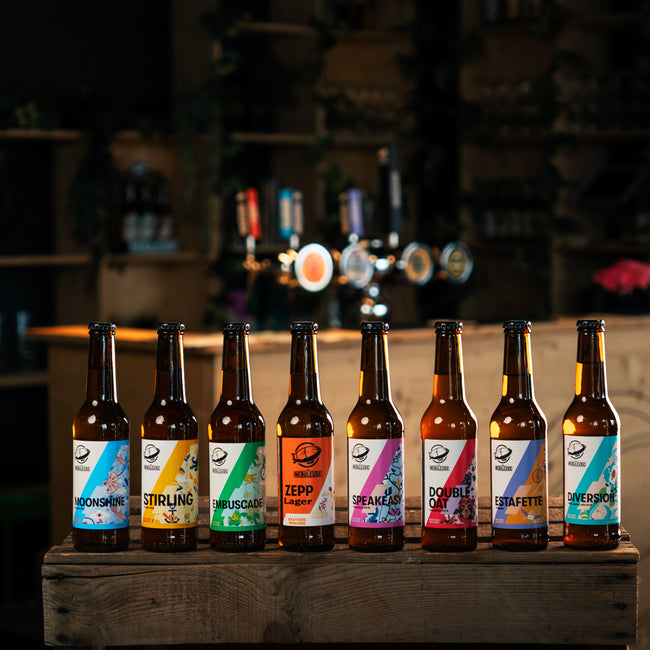
The Session IPA bears the name "IPA," but its parameters tell a different story. With an ABV below 4.5%, it falls within the lower range of an APA. In practice, a Session IPA can be less bitter than a well-hopped Pale Ale. Our Speakeasy at 4% is a good example.
The NEIPA (New England IPA) blurs the lines even further. Its massive dry-hopping brings intense tropical aromas, but a perceived bitterness much lower than the actual IBUs. On the palate, the result is striking: hazy, creamy, almost sweet, the NEIPA can seem less aggressive than a classic dry APA.
If you want to explore this contrast, our article on the differences between NEIPA and West Coast IPA details the two philosophies well.
What it reveals: "IPA" has become an entire universe, with very varied internal logics. Not a fixed recipe, but an expanding family.
How to read a label to know what you're drinking
Even before tasting, the label gives you clues. The displayed style (Pale Ale, IPA, Session IPA) is an initial reference, but it's not standardized: each brewery interprets the spectrum in its own way. What truly matters: the IBU (if indicated) and the ABV.
- ABV under 5% + IBU under 40 → you're probably in Pale Ale or Session IPA territory
- ABV between 5.5 and 7.5% + IBU above 40 → classic IPA
- High ABV but "juicy" or "hazy" label → NEIPA, where the perceived bitterness will be much softer than the numbers suggest
If the label mentions the hops used, that's also a clue: Citra, Mosaic, Galaxy point towards a tropical and fruity profile. Simcoe and Columbus announce more resin and bitterness.
To choose, listen to your craving for bitterness
Forget the taxonomy. The real question is what you're looking for in your glass.
- You want balanced freshness, present but not overpowering hops? Head for Pale Ale or APA. The CamAleLeon, with its citrus notes, fits this description.
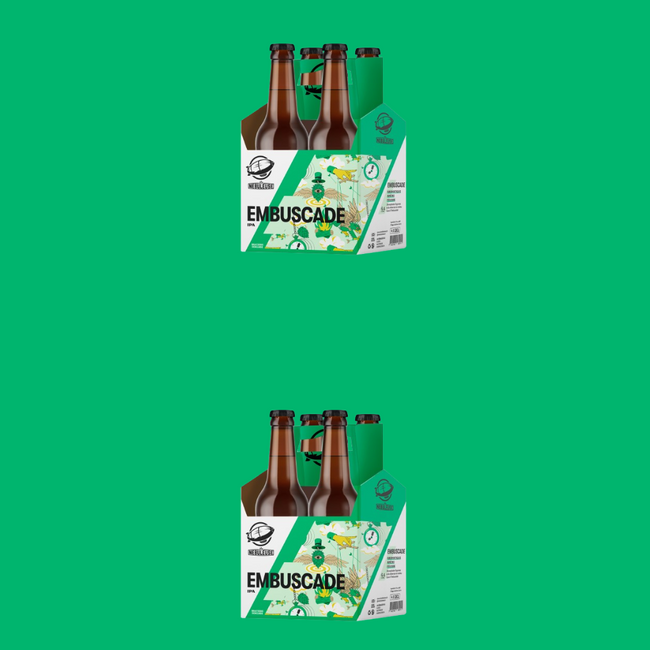
- You want the aromas upfront, a dry finish, hops that pack a punch? An IPA is what you need. TheEmbuscade with its blood orange and resin aromas will give you a clear idea of what that means.
- You want hoppy flavors while staying light in alcohol? The Session IPA is made for that. The 4% Speakeasy offers exactly this compromise.
The boundary between Pale Ale and IPA is not a wall. It's a spectrum, ranging from subtle balance to a hoppy explosion, with all the nuances in between.
The best way to understand the difference is to taste it. You can explore the entire range on our e-shop with free delivery from CHF 100, or come compare them directly at La Tap bar in Renens.
Cheers! 🍻


