

Special fermentation techniques in craft beer
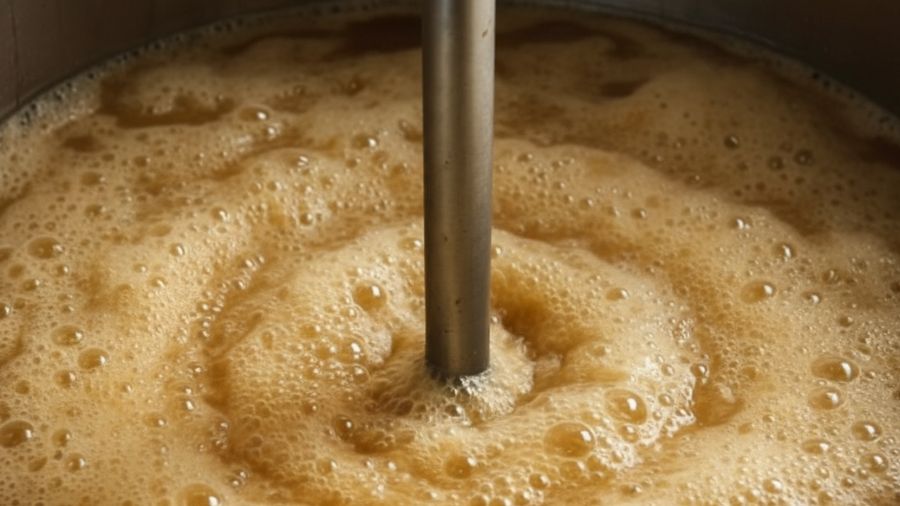
The magical transformation of simple sweet wort into that sparkling, flavorful nectar we call beer. It's almost miraculous! Behind this apparent magic lies a fascinating process, the true conductor of every brewing creation: fermentation. Yes, that stage where yeast parties in your wort, unremarkably turning sugar into alcohol... or perhaps not so unremarkably after all.
If you thought all fermentations were equal, you're seriously mistaken. In the craft brewing world, fermentation isn't just a technical step. It's an extraordinary playground where the true soul of the beer is created. Temperature plays a crucial role in this modern alchemy, shaping the personality of your creation down to its slightest aromatic details.
While the industry standardizes this process for efficiency (and banality), craft brewers, on the other hand, explore the infinite possibilities offered by special fermentation techniques. These unique approaches allow them to sculpt unique aromatic profiles, play with textures, and create sensory experiences that make you raise an appreciative eyebrow from the first sip. And yes, your beer deserves better than to be the result of a fermentation rushed in 72 hours flat.
The evolution of fermentation techniques: between tradition and innovation
From mysterious origins to scientific understanding
Beer fermentation probably originated from a happy accident, several millennia ago. Imagine the scene: forgotten damp grains left in the open air, wild yeasts passing by, and suddenly... Surprise! A liquid with strangely pleasant effects. For centuries, this process remained shrouded in mystery, often attributed to divine forces or a form of alchemy.
It wasn't until the 19th century, thanks to the revolutionary work of Louis Pasteur, that the veil was lifted on this phenomenon. By identifying yeasts as responsible for converting sugar into alcohol and CO2, Pasteur not only solved a millennial enigma but also paved the way for a scientific understanding that would revolutionize the approach to brewing.
This discovery was quickly followed by the isolation of the first pure yeast strains by Emil Christian Hansen in 1883, marking a fundamental shift: moving from fermentation with unpredictable wild yeasts to a controlled process, using specific strains selected for their predictable characteristics.
The main fermentation families and their specificities
In the brewing world, four main fermentation families are traditionally distinguished, each with its own impact on the final aromatic profile.
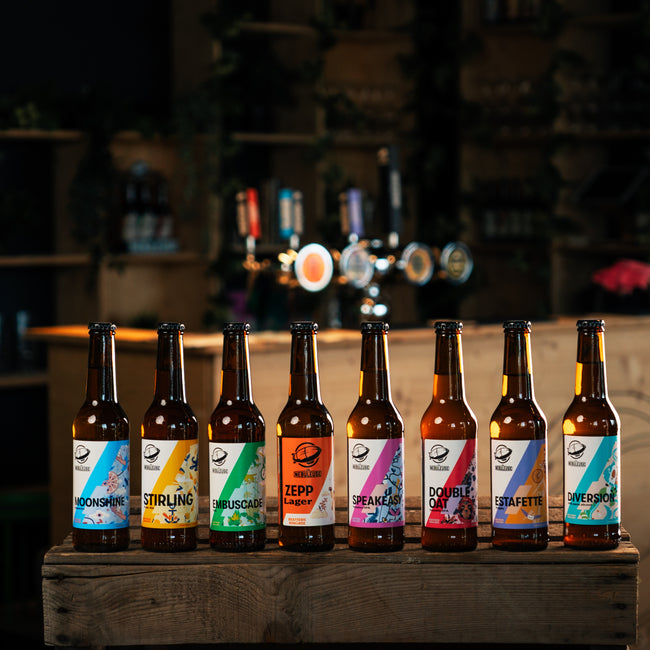
Top fermentation: Carried out with Saccharomyces cerevisiae yeasts that work in a temperature range between 15°C and 25°C, it is characteristic of British ales, IPAs, Belgian beers, and many modern styles. This method generally produces beers with complex aromatic profiles featuring pronounced fruity and spicy notes. Double Oat perfectly illustrates what top fermentation can offer, with its tropical mango and pineapple notes partly derived from the reaction between its US yeast and the oat flakes used in the brew. Hop bioconversion phenomena also play a crucial role here, transforming certain compounds present in hops into new aromas.
Bottom fermentation: Conducted with Saccharomyces pastorianus yeasts that operate at cooler temperatures (7°C to 13°C), it characterizes lagers, pilsners, and other beers with more subtle aromas. This technique generally offers cleaner profiles that highlight malts and hops. Zepp, a craft lager with delicate floral notes, is an excellent example of what a perfectly mastered bottom fermentation can produce.
Spontaneous fermentation: Here, no yeast is intentionally added. The wort is exposed to open air in open cooling tanks (koelschip), allowing microorganisms present in the environment to naturally colonize the liquid. This ancestral Belgian method gives rise to lambics, gueuzes, and other sour wonders that thrill enthusiasts of strong sensations. It produces beers of unparalleled complexity, with notes that are often tart, fruity, and "funky" – to use the connoisseur's jargon.
Mixed fermentation: This approach combines the use of conventional brewing yeasts with other microorganisms such as Brettanomyces, Lactobacillus, or Pediococcus, the three actors that define the profile of an artisanal sour beer and fuel the debate between purists and modern method enthusiasts. It allows for complex profiles that evolve considerably over time. American sour beers, certain saisons, and modern sours often employ this technique, creating beverages with wild but controlled characters.
Craftsmanship versus industrialization
The industrialization of brewing has led to a massive standardization of fermentation techniques. In the pursuit of productivity and reproducibility, large brewing groups have adopted highly controlled processes, aiming for uniformity rather than singularity. Fermentation thus becomes a simple link in the production chain, subject to the imperatives of speed and efficiency.
In contrast to this approach, craft breweries like La Nébuleuse value fermentations as a creative space where the essence of a beer's identity is forged. Far from being a mere technical step, fermentation is considered the beating heart of the brewing process, a crucial moment where the aromas and flavors that will define a creation develop.
This artisanal vision is part of a re-appropriation of traditional know-how, enriched by modern scientific knowledge. By restoring this fundamental stage to its former glory, craft brewers are constantly reinventing their craft, transforming each brew into a unique expression of their creativity. Because no, fermentation is not just a necessary evil to produce alcohol; it is the beating heart of your next tasting experience.
Temperature control: the delicate art of sculpting aromas
The impact of temperature on yeast metabolism
If yeast were a musician, temperature would be its conductor. Every variation, even minimal, profoundly influences how yeasts will transform the available wort. This wort, the result of the meticulous metamorphosis of barley into a fermentable substrate, then becomes the raw material for this fermentative alchemy. It goes without saying that the thermometer is not a gadget in a craft brewery; it is the equivalent of a maestro's baton.
At low temperatures, yeasts work slowly, methodically, producing few esters and phenols – these compounds responsible for fruity and spicy notes. The result? Beers with a "clean" profile, where malts and hops express themselves with clarity. This is the preferred approach for lagers like Zepp, where low-temperature fermentation allows the delicate floral aromas of noble hops to express themselves without interference.
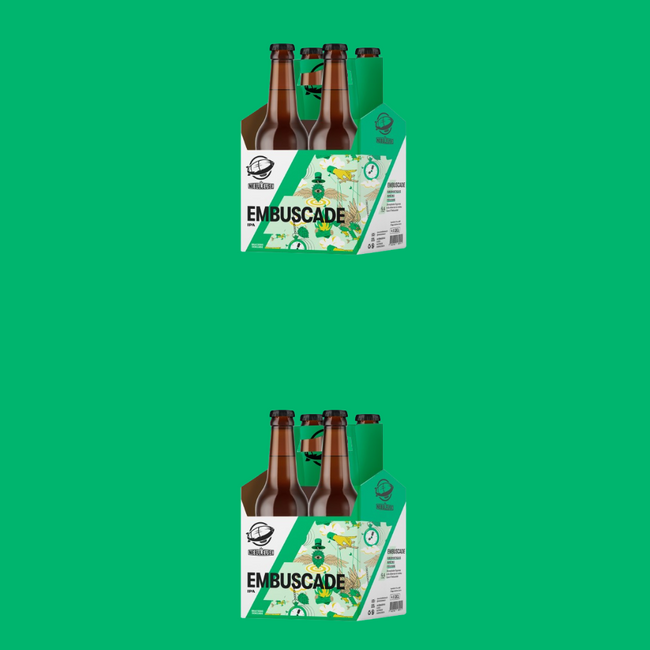
Conversely, in top fermentation, higher temperatures stimulate the production of fruity esters and sometimes spicy phenols. More active yeasts generate more aromatic by-products. Embuscade, with its straightforward aromas of blood orange and resin, owes part of its character to this controlled top fermentation which amplifies the expression of American hops. The enzymatic activity of yeasts and fermentation kinetics play a decisive role here in the development of the final profile. A true microbial ballet precisely orchestrated.
But temperature is not just a matter of "high" or "low" – it's a whole spectrum of possibilities. Brewers are increasingly exploring "thermal excursion profiles," intentionally varying the temperature at different stages of fermentation to obtain more complex aromatic palettes.
Control equipment: from cool cellars to precision thermoregulation
The history of temperature control in brewing is also the history of the technological evolution of the trade. Our brewing ancestors depended on the seasons and architecture – cool cellars, warm attics – to maintain adequate fermentation conditions. Beer was thus a seasonal product, with some styles only able to be brewed at certain times of the year.
The invention of mechanical refrigeration in the 19th century revolutionized this aspect of brewing, making it possible to produce lagers year-round. But it was truly the modern era that democratized precision thermoregulation systems, making a level of control previously reserved for large industrial groups accessible to microbreweries.
Today, a craft brewer has an impressive array of options: double-walled fermenters with glycol circulation, dedicated cold rooms, immersion heating systems, and even smart tanks capable of automatically following programmed thermal profiles.
This technical mastery allows for creative approaches like the "cold fermentation" of Saisons and Farmhouse Ales, where a fermentation started at ambient temperature is gradually cooled to extract unique rustic flavors. Or the "hot pitch" of certain New England IPAs, where the wort is inoculated at an abnormally high temperature to stimulate the production of specific esters, before being rapidly cooled to avoid undesirable flavors. But beware, this creativity requires constant vigilance: faulty control can quickly tip a promising creation towards these flaws that sabotage your best craft beers.
Even more radical alternative methods are beginning to emerge, challenging traditional processes. Precise oxygenation management during fermentation represents another fascinating territory of exploration for craft brewers, directly influencing yeast health and the production of specific aromatic compounds.
Creative thermal profiles: when temperature becomes a tool of expression
Beyond simply maintaining a constant temperature, craft brewers explore complex "thermal journeys" that radically transform the character of their creations.
Take the example of a popular technique among contemporary Belgian beer creators: the "step-up fermentation profile". Fermentation starts at a relatively low temperature (18-19°C) for the first 24 to 48 hours, a period during which essential aromatic precursors are formed. Then the temperature is gradually increased to 23-25°C for the last few days, stimulating the production of fruity esters and ensuring complete attenuation. This balanced approach yields beers like Estafette, this Belgian triple with fruity banana and apricot aromas that nevertheless retains a remarkable finesse.
At the opposite end of the spectrum, some lager brewers experiment with the "diacetyl rest" – a temporary elevation of temperature at the end of primary fermentation that allows yeasts to "clean up" undesirable compounds like diacetyl, before the beer is cold-conditioned. This technique contributes to the crystalline crispness and aromatic purity of certain craft lagers.
The future of thermal profiles seems limitless: avant-garde brewers are already experimenting with algorithms that adjust temperature in real-time based on fermentative activity, or thermal cycles inspired by day/night variations that would have affected historical fermentations. A true microbial clockwork that pushes the boundaries of what's possible.
The magic of yeasts: choosing, blending, and hybridizing strains
The "personalities" of different yeast strains
If you thought yeasts were just simple microorganisms converting sugar into alcohol, think again. Each yeast strain has a unique "character", shaped by millions of years of evolution.
Belgian abbey yeast, like that used for Estafette, is distinguished by its generous production of fruity esters (banana, apricot) and spicy phenols (clove, pepper), creating complex profiles even with relatively simple recipes. "Clean" American yeasts, favored for IPAs like Embuscade, are more discreet, highlighting the hops while adding a slight fruity touch. As for lager yeasts, they excel in the art of discreet fermentation, producing few by-products to allow the purity of the raw materials to express itself.
This diversity is not limited to cultivated species. In the wild world, yeasts like Brettanomyces bring "funky" notes of leather, very ripe pineapple, or wet hay that can radically transform a beer. Traditional Scandinavian strains like Kveik defy established rules by fermenting at surprisingly high temperatures (up to 40°C) without producing the undesirable flavors usually associated with these conditions.
Some specialized strains go even further by allowing unique profiles to be created with very little alcohol. These "low-attenuation" yeasts ferment slowly and naturally produce little ethanol while developing complex fruity esters. Their mastery is particularly crucial when trying to brew a non-alcoholic IPA that retains all its aromatic intensity, a technical challenge where the choice of yeast and the precise stopping of fermentation become absolutely decisive.
Blends and microbial cocktails and the creation of flavor symphonies
Why limit yourself to a single strain when you can use several? This question has paved the way for one of the most creative trends in modern brewing: the use of yeast blends.
The "co-pitching" technique consists of simultaneously inoculating different Saccharomyces strains, each contributing its characteristics to the final profile. These blends can combine British ale yeasts for their fruity esters with American strains for their attenuation power, creating profiles impossible to achieve with a single strain.
Even more complex, "mixed culture" fermentation incorporates different types of microorganisms – conventional yeasts, Brettanomyces, lactic acid bacteria – into a microbial ecosystem that evolves over time. This approach, inspired by traditional Belgian methods, allows for the creation of slow-maturing beers with exceptional aromatic depth.
The most adventurous brewers even "sequence" their pitches, adding different strains at precise moments during fermentation. For example, starting with a classic ale yeast to establish a base profile, then adding Brett to develop a wild complexity during maturation. This microbial choreography allows for unparalleled creative precision. Progressive pitching techniques and sequential fermentations open up a whole universe of possibilities for brewers who want to explore the fourth dimension of brewing creation: time.
Pressure Fermentation: How to Shape Esters Without Playing with Temperature
A particularly interesting technique that is gaining popularity is pressure fermentation. This process involves maintaining CO₂ back pressure in the fermenter during the active phase of fermentation.
This additional pressure modifies yeast metabolism, reducing the production of esters and volatile compounds even at higher temperatures. In practice, this allows for fermenting a lager at an ale temperature (15-18°C instead of 8-12°C) while maintaining the characteristic aromatic crispness of low-temperature fermentations – a considerable gain in time and energy.
The technique also finds its application in ales, allowing for "calming" normally very expressive strains or creating hybrid profiles between lagers and ales. This approach is particularly relevant for emerging styles like IPLs (India Pale Lager) which seek to combine the crispness of a lager with the aromatic expressiveness of an IPA.
Innovative breweries are even exploring variable pressure profiles during fermentation. Starting at atmospheric pressure to allow for initial aromatic expression, then gradually increasing the pressure to refine the profile. A further demonstration of craft brewers' ability to transform technical constraints into creative opportunities. Advances in the molecular understanding of fermentative processes now allow brewers to design precisely calibrated fermentation protocols to obtain exactly the desired aromatic profiles.
Secondary Fermentations and Conditioning
Bottle Refermentation: A Living Tradition
Far from being over after the primary fermentation, the microbial adventure can continue directly in the bottle thanks to refermentation – a technique that radically transforms the character of the beer and its mouthfeel.
This traditional method, particularly associated with great Belgian and Trappist beers, consists of adding a small amount of sugar and often fresh yeast at the time of conditioning. Much more than simple carbonation, this second fermentative life radically transforms the mouthfeel and the overall tasting experience.
Refermentation generates a particular mouthfeel, with finer and more persistent bubbles that carry aromas differently. It also allows for the evolution of the beer over time, with the yeasts continuing to work slowly, gradually releasing new aromatic compounds and absorbing oxygen – thus protecting the beer from oxidative aging.
Beers like Estafette greatly benefit from this approach, developing additional complexity after a few months of aging, with apricot notes deepening and a roundness asserting itself in the mouth. The mechanisms of progressive release of aromatic compounds by yeasts in the bottle and their interaction with the evolution of complex residual sugars represent a fascinating area of study for brewers who seek to master the art of living conditioning.
Barrels and Open Fermenters: The Influence of the Container
The container in which fermentation takes place profoundly influences the final character of the beer, not only by its shape, but also by the microorganisms it can host and the chemical interactions it allows.
Traditional open fermenters, such as British "Yorkshire squares" or shallow Belgian tubs, promote particular gas exchanges and unique aromatic expression. Their specific geometry influences the formation of krausen (the fermentation foam) and the reabsorption of certain compounds, while their openness allows for slight contact with the surrounding air – creating a profile impossible to replicate in a closed system.
As for fermentation in wooden barrels, it represents one of the most exciting frontiers of contemporary brewing. These living containers house their own microbial ecosystems and allow for subtle exchanges with the environment. A barrel that has contained wine will not only bring tannic or fruity notes, but also wine yeasts that can contribute to fermentation. A whisky barrel will offer vanilla, caramel, and oak notes that will blend with the beer's profile, creating a complexity impossible to achieve by other means.
Pioneering breweries even go so far as to create their own "solera barrel" programs, drawing inspiration from sherry aging methods, where only a portion of each barrel is drawn off, then topped up with younger beer. This creates a perpetual aging system that generates profiles of remarkable complexity. This approach raises fascinating questions about microbial interactions in fermentative ecosystems established over several years, and how these communities evolve to create sensory profiles impossible to replicate by other means.
Aging and Evolution: Designing Beers That Improve with Time
Unlike the industrial dogma that suggests beer should always be drunk fresh, some artisanal creations are designed to flourish over time, like great wine vintages.
This approach requires particular design from the outset: recipes generally richer in alcohol to serve as a natural preservative, a hopping profile that anticipates the transformation of aromatic compounds over time, and often fermentation techniques that deliberately leave complex sugars that yeasts will take months or years to gradually break down.
Mixed fermentation beers are particularly well-suited to this evolution. In these creations, different microorganisms work at varying rates: conventional Saccharomyces rapidly ferment simple sugars, then pass the baton to Brettanomyces which slowly break down more complex sugars. The latter can remain active for years, gradually transforming the beer's profile, which gains in complexity.
Other creations like barleywines or imperial stouts can age majestically even without continuous fermentation. In these cases, it is the chemical evolution of existing compounds that gradually transforms the profile: controlled oxidation of certain higher alcohols, formation of new complex esters, and this fascinating metamorphosis of bitterness that gradually softens initially biting beers.
This temporal dimension adds an extra layer of depth to the art of brewing, transforming certain beers into true time capsules that, with each tasting, tell a fascinating evolutionary story. The study of the biochemical processes involved in beer aging and the evolution of their organoleptic properties represents an exciting frontier of modern brewing research, at the intersection of chemistry, microbiology, and sensory analysis.
Fermentation as the Signature of a Craft Brewery
In the standardized world of industrial production, special fermentation techniques represent a formidable space of freedom and expression for craft brewers. Much more than a mere technical step, fermentation has become the distinctive signature that allows each brewery to reveal its personality and vision. This is where the real difference lies between a beer you forget and a creation you crave. Between a thirst-quenching drink and an experience that transports you.
This philosophical approach to fermentation marks a fundamental break with the industrialization that has long dominated the sector. Where large groups seek efficiency and uniformity, the craft brewer values uniqueness and authenticity. Fermentation is no longer perceived as a simple means of producing alcohol, but as the beating heart of a unique brewing creation.
Consumers, increasingly discerning, recognize and appreciate this difference. They are no longer just looking for a standardized beer, but an authentic sensory experience that tells a story, bears the signature of a place and a creator. Special fermentation techniques, through the aromatic richness they generate, perfectly meet this expectation of originality and character. Because ultimately, who wants to drink the same thing as everyone else?
As the craft movement continues its global expansion, creative approaches to fermentation are shared, hybridized, and constantly evolving. From centuries-old Belgian traditions to American brewers' innovations, from rediscovered Nordic techniques to avant-garde microbial experiments – brewing fermentation is experiencing a true golden age of creativity.
In this effervescent landscape of innovation, each brewery finds its way, develops its methods, and refines its fermentative signature. For La Nébuleuse, this approach translates into a range where each creation expresses its own personality, while sharing a common DNA of audacity and uncompromising quality. Because ultimately, mastering special fermentation techniques means fully embracing the magical transformation that turns a simple wort into a unique creation – that fascinating alchemy which, for millennia, has transformed grains into moments of conviviality and shared pleasure.


