

The 5 steps to a successful beer tasting at home

Organizing a beer tasting at home is less complicated than assembling IKEA furniture without the instructions. You don't need to be a certified sommelier. Nor do you need to transform your living room into a temperature-controlled cellar. Just a few well-chosen beers, decent glasses, and the desire to have a good time with friends.
The trick is to avoid the classic mistakes that ruin the experience. Serving everything too cold, starting with the strongest beer, or swirling your glass like it's wine. We've organized hundreds of tastings at the brewery; we know the good ones and the bad ones.
Step 1: Choose 4 to 6 different craft beers
Four to six different beers is the sweet spot. Enough to discover the diversity of styles, but not so many that you get overwhelmed before the end. We estimate 10 to 15 cl per beer per person. That leaves room to taste and compare, without turning the evening into a drinking binge.
The goal is variety. A Lager for freshness, a Pale Ale for balance, an IPA for hops, a Wheat Beer for spicy notes, a Stout for the roasted character. Each style brings its own unique character. And don't forget non-drinkers or drivers. A good non-alcoholic beer does exist. Really.
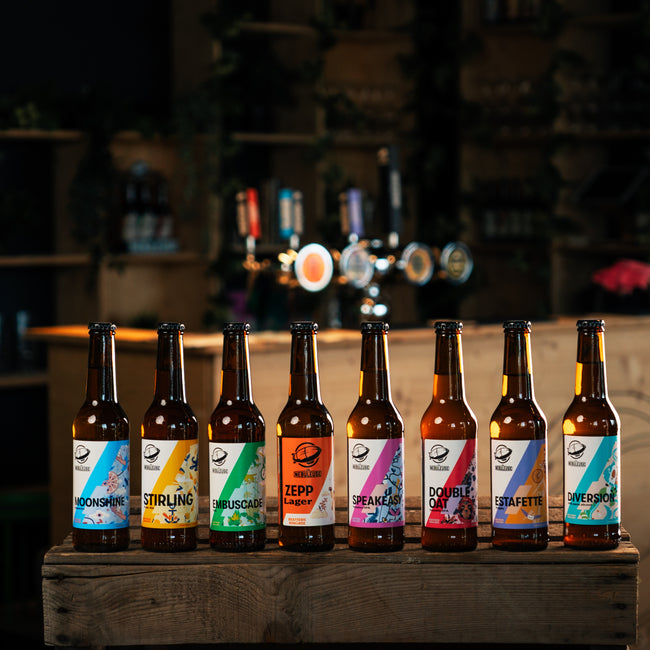
Choose craft breweries. Their beers have character, stories, and recipes that break the mold. Our Discovery Pack was designed precisely for this. Eight beers, eight different styles. Customers often tell us that a first tasting allows everyone to find their favorite. Not everyone appreciates the same styles, and that's what makes the evening so interesting.

If you are new to the world of craft beer, a few simple tasting techniques will help you better identify the aromas and flavors of each style.
Step 2: Prepare the equipment and beers at the correct temperatures
As for glasses, there's no need to invest in 15 different models. Tulip glasses or wine glasses will do for all styles. One glass per person is enough. Rinse it with water between each beer to avoid mixing flavors.
The essential accessories consist of three things. Carafes of water to cleanse the palate between beers. Neutral bread for the same purpose. A working bottle opener. That's all.

Now, the mistake we see all the time on our guided tours. People think a beer has to be ice-cold to be good. That's wrong. Extreme cold is precisely what masks the flaws of a bad beer. It dulls the aromas, it numbs the taste buds.
A good beer is best enjoyed at around 8°C. We even have a simple rule here: the alcohol percentage equals the serving temperature. A Zepp at 4.7% is best enjoyed at 5-6°C. A Double Oat at 8% is perfect at 8-10°C. Easy to remember.
Take your beers out of the fridge 10 to 15 minutes before serving. This will give them time to reach the right temperature. And if you're wondering which glass to use depending on the style , keep in mind that the shape really does influence the perception of aromas.
And above all, never swirl your glass like you would aerate wine. It removes the carbonation and damages the beer. Even if it brings out the aromas, it ruins the product too much to be worth the effort. Beer isn't wine.
Step 3: Organize the tasting order from light to strong
Let's not beat around the bush. If you mess up the tasting order, you'll ruin your evening. It's as simple as that.
Always start with the lightest beer. A non-alcoholic one, a lager, or a wheat beer. If you start with a heavily hopped IPA, everything that follows will taste bland. Your taste buds will be overwhelmed with bitterness. Game over.

Strong flavors mask subtle aromas. It's like blasting death metal before enjoying a piano piece. It just doesn't work.
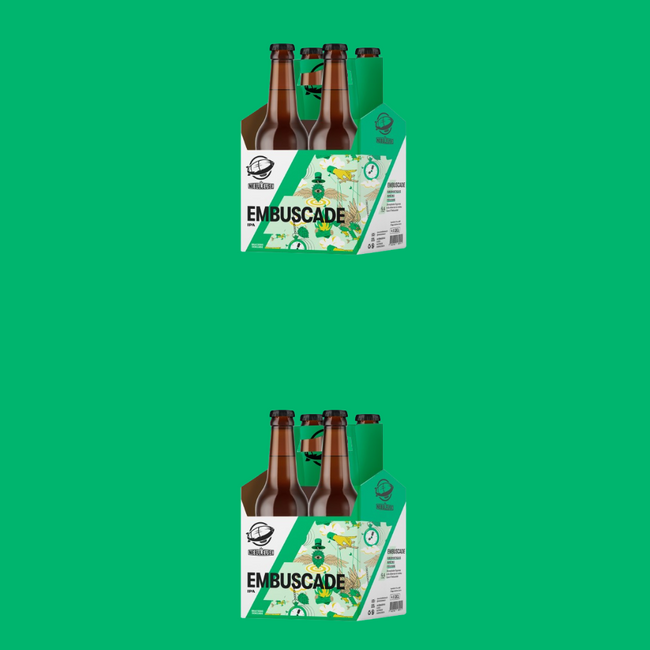
The ideal progression looks like this. Start with a non-alcoholic beer like Diversion at 0.5% or a light lager like Zepp at 4.7%. Follow with a crisp wheat beer, like Moonshine at 5%. Then a balanced Pale Ale such as Stirling at 5.3%. Increase the intensity with an IPA like Embuscade at 6.4%. And finish with a Double IPA like Double Oat at 8%.
If in doubt, simply follow the increasing alcohol content. This is the most reliable method.
And for those who like a challenge, we have a tip that's always a hit. After this initial gradual tasting, organize a blind tasting. Have your friends taste the same beers blindfolded to see if they recognize their favorites. It's fun, often surprising, and gets the conversation flowing again.
Step 4: Prepare simple food and beer pairings
The aim of the accompaniments is to enhance the tasting experience without overshadowing the beers. We stick to classics that work.
A variety of cheeses , from mild to strong. Cured meats. Dried fruit, nuts. Bread and crackers. Nothing complicated, just enough to nibble on between sips.
Some pairings that work well. Lagers go perfectly with fine charcuterie. IPAs stand up to strong cheeses and grilled meats. Stouts love dark chocolate and blue cheeses.
The key is to offer variety. Everyone picks what they like and creates their own pairings. There are no hard and fast rules. If you want to explore bolder combinations of beer and food , the possibilities are endless.

Step 5: Liven up the tasting without taking yourself too seriously
Introduce each beer briefly. Mention the style, the origin, and one or two characteristics that make it unique. No need for a lecture, just enough to provide some context.
Guide your sensory analysis in three simple steps. First, observe: the color, the clarity, the head retention. Next, smell: the aromas of citrus, malt, hops, and spicy notes. Finally, taste: the flavors, the bitterness, the texture, and the lingering finish.
A fun little fact we love to share during our tours: unlike wine, you can't spit out beer during a professional tasting. The bitterness receptors are located at the back of the palate. You have to swallow to truly appreciate it. Fortunately, with servings of 10 to 15 cl, it remains quite reasonable.
A successful tasting is above all about creating a moment of sharing.
The key points to remember can be summed up in three rules. Respect the order of progression from light to strong. Serve at the right temperature, not too cold. And above all, create a relaxed atmosphere.
Beer tasting is first and foremost a moment of discovery where everyone can find their preferences. No pressure, no rigid rules. Just pleasure and curiosity.
Cheers 🍻


