

The Art of Dry Hopping in Craft Beer
Lovers of hoppy beers know this: a juicy IPA, with its citrus and tropical fruit notes exploding in the mouth, is a real pleasure. But how do you achieve this aromatic intensity without turning the beer into an undrinkable bitter potion? The answer lies in two words: dry hopping.
This technique, which involves adding hops after boiling, allows for the extraction of a maximum of essential oils without releasing too much bitterness. But beware, it's a subtle art: when to add the hops? At what temperature? How much? Too late, and the aromas dissipate; too early, and bitterness takes over.
What is dry hopping and why is it crucial?
Hops are the aromatic soul of a beer. They bring those notes of citrus, tropical fruits, resin, or even flowers. To extract their full essence, you still need to know when and how to use them. That's where dry hopping comes in.
Unlike classic hopping, where hops are added during the wort boil, dry hopping is done cold, after primary fermentation or at the very end of fermentation. The objective? To extract aromas without increasing bitterness. Because at high temperatures, the alpha acids in hops transform into bitter compounds. But when cold, only the essential oils diffuse, giving the beer an incomparable aromatic intensity.
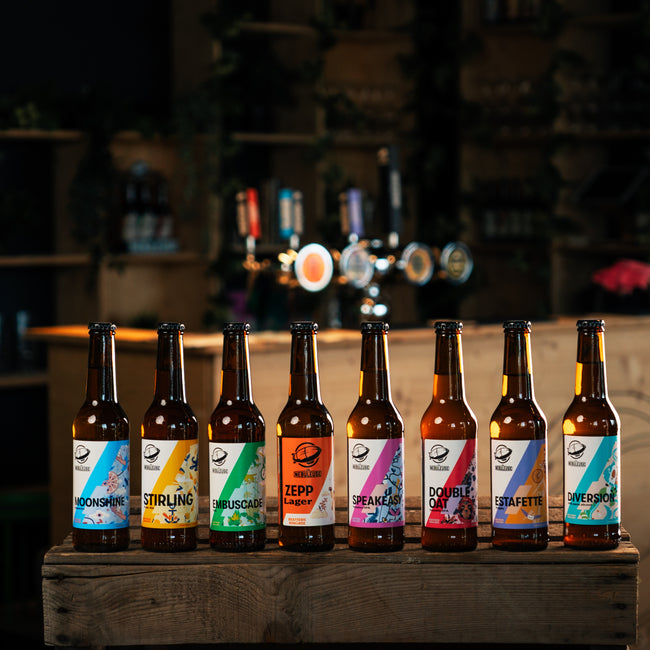
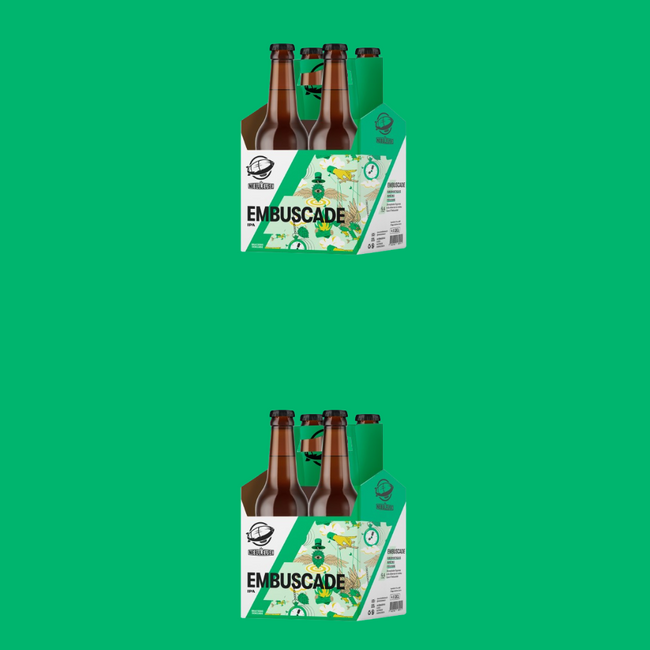
This technique has become indispensable in styles like IPAs or Pale Ales. Take for example the Embuscade, an IPA with clear notes of fruit pastilles and blood orange. This aromatic explosion is the result of precise dry hopping with Herkules, Mandarina Bavaria, Cascade, and Amarillo hops, each contributing its characteristic notes while maintaining a perfectly balanced bitterness.
Mastering dry hopping: the keys to optimal hopping
Dry hopping is a matter of timing and dosage. Added at the right time and at the right temperature, it enhances a beer. Poorly managed, it can ruin it.
When to add hops?
Two main schools of thought exist:
-
Dry hopping during active fermentation (biotransformation): Added during fermentation, hops interact with yeast, creating new aromas and boosting fruity perception.
-
Post-fermentation dry hopping: More classic, it allows for maximum aroma extraction without interference from the yeast.
Some brewers go even further with double dry hopping (DDH), which involves two successive additions to further intensify the aromas.
At what temperature?
This is one of the most critical parameters. Too cold, the extraction of essential oils will be limited. Too hot, and oxidation will spoil everything. An ideal temperature is between 12 and 16°C (53 and 60°F) to maximize aroma diffusion without risking beer alteration.
How much?
It's all about balance. For a well-hopped IPA, we're talking about 5 to 10 g/L of hops in dry hopping. For a Double IPA, it can go up to 15 g/L or more. But beware: too much hops can give an unpleasant vegetal texture.
An excellent example of this mastery is found in the Stirling, an American Pale Ale that perfectly balances its grapefruit and lychee notes thanks to meticulous dry hopping of Northern Brewer, Cascade, and Simcoe hops.
Lighter beers too!
Dry hopping is not just for big IPAs. The Speakeasy, a Light IPA at 4% ABV, demonstrates that fresh and fruity aromas of lime, white grape, and tangerine can be obtained even in a light beer, thanks to precise dry hopping with Cascade, Mandarina Bavaria, and Hallertauer Blanc.
Dry hopping and aroma evolution: what changes over time
Dry hopping gives a beer an aromatic explosion at the time of packaging. But these aromas, however powerful, are ephemeral.
Why do hop aromas fade?
Hop essential oils are very volatile. Over time, they oxidize and lose intensity. The result: a NEIPA or Hazy IPA that smelled of mango and orange can, after a few months, become duller, with herbaceous or slightly stale notes.
How to stabilize these aromas?
-
Minimize oxygenation during dry hopping and packaging. Oxygen is the enemy of hoppy aromas!
-
Use hops rich in stable essential oils that are more resistant to oxidation.
-
Store beer cold to slow down aroma degradation.
Conclusion: a subtle art for unforgettable beers
Dry hopping is one of the most powerful tools of the modern brewer. It allows transforming a classic beer into a true sensory experience, revealing the full aromatic richness of hops.
But like any advanced technique, it requires mastery: choosing the right moment, the right temperature, the right amount... It's a delicate balance between science and intuition. An art that brewers continuously refine to offer ever more intense and memorable taste experiences.


