

What are the labels for a true Swiss craft beer?
Welcome to the jungle of the beer aisle. Everything is "artisanal," "craft," or "traditional." That's great. But what does that really guarantee?
The frustration is understandable. You're looking for the passionate work of an independent brewery and you stumble upon the latest marketing ploy from an industrial giant. A beer in a suit and tie pretending to be a beer for your buddies.
Craftwashing works. A giant buys a small brewery, keeps the name, the hipster logo, and the story of the passionate brewer. In reality, production follows the same industrial processes. In Switzerland, industrial groups dominate more than 97% of the market by volume. They have bought several craft breweries in recent years. They keep the name and the craft image, but gradually change the practices.
So, how do we find our way around? Let's get down to brass tacks.
The term "Artisanal" is not a protected label.
This is the crucial point. In Switzerland, "artisanal" or "craft" is not a protected designation. There is no legal protection whatsoever. The word itself is not protected. Anyone can print it on a label.
Being "craft," for us, is a philosophy. It's about being independent, owning your own brewery, experimenting with recipes, and cleaning your tanks. It's not a diploma you hang on the wall.
The Swiss Beer Award: the benchmark label that validates taste
Unlike the term "artisanal," the Swiss Beer Award is an official competition with a strict protocol. More than 1,100 breweries registered in Switzerland can participate. And there's no room for complacency: the evaluation is independent and blind.
Four demanding medal levels
Gold for absolute excellence. Silver for very high quality. Bronze for consistently good quality. Anthracite for beers that deserve recognition but don't quite reach the podium.
These medals appear on the labels. When you see one, you know the beer has been evaluated. Not just by internal marketing.
An evaluation that doesn't cheat
The process begins at Labor Veritas AG. Technical parameters are analyzed in the laboratory. This is followed by sensory tasting by the Swiss Beer Panel. The samples arrive anonymized; no one knows which brewery sent what.
The jury comprises specialists in sensory analysis, beer sommeliers, and master brewers. The ZHAW oversees the scientific aspects.
A label that validates taste, not intention. Not origin. The final product.
The organic label guarantees the ingredients, not the taste.
95% minimum organic ingredients
The AB (French) and Euroleaf (European) labels require a minimum of 95% organic ingredients. Specifically, for a beer: organic malt, organic hops, organic spices.
Bio Suisse (the "Bud") goes further. Its specifications limit the permitted hop varieties. Why? Because organic hops remain a limiting factor. Not all varieties are available for certified organic cultivation.
These labels guarantee the origin and cultivation methods of the ingredients. Not necessarily the taste. You can make a soulless organic beer and an exceptional conventional one. It's a choice of supply chain, not a guarantee of flavor.
Gluten-free certification: a technical guarantee
A guaranteed threshold below 20 ppm
The European regulation, applied in Switzerland, sets the threshold at less than 20 ppm (parts per million). Below this threshold, beer can display the official logo: a crossed ear of wheat.

Our Stirling beer obtained its gluten-free certification in 2024. Each batch is tested in an independent laboratory to guarantee a level compliant with the standard. A Pale Ale that retains the taste of malted barley, but which those with gluten intolerance can drink without risk.
The real "label": the brewery's independence
Labels give you clues about the ingredients (Organic), specific features (Gluten-Free). Medals validate the taste.
But the real "label", the one that encompasses everything, is independence.
The criteria for independence of a craft brewery
A true craft brewery meets several criteria. Legal and economic independence: no majority shareholder belonging to a large group . Physically separate facilities: you don't brew in a giant's factory by renting a production line on Tuesdays.
These criteria are not subject to an official label in Switzerland. However, they allow for a clear distinction to be drawn between artisanal production and disguised industrial production .
How to verify independence in practice
First step: the brewery's website. An independent brewery usually provides information about its founders, its history, and its production address. If everything remains vague, be wary.
Second step: transparency regarding shareholding. Truly independent breweries have no problem disclosing this. Those discreetly owned by industrial groups carefully avoid the subject.
The Swiss Brewers Association (ASB) represents the country's breweries. Membership doesn't guarantee independence, but it's an indicator. We joined the ASB in May 2025.
The best label isn't on the bottle. It's knowing who owns the brewery.

Transparency as the ultimate guarantee
The Swiss Beer Award validates technical and sensory quality. Organic labels guarantee the origin of the ingredients. Gluten-free certification protects those with intolerances. Legal independence ensures that the brewery remains in control of its decisions.
These guidelines are helpful. But they don't replace the transparency of the brewery itself.
A brewery that takes responsibility for its process, explains its technical choices, shows its facilities, and communicates about its suppliers... that brewery needs fewer labels to prove its authenticity.
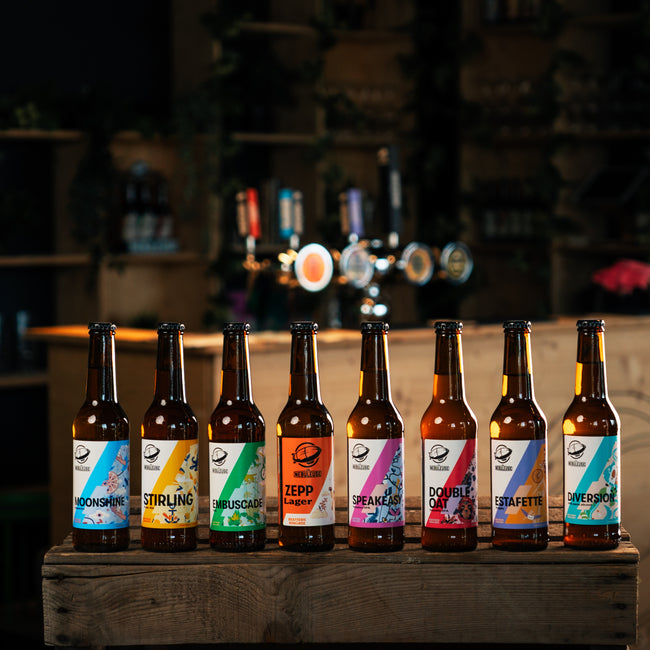
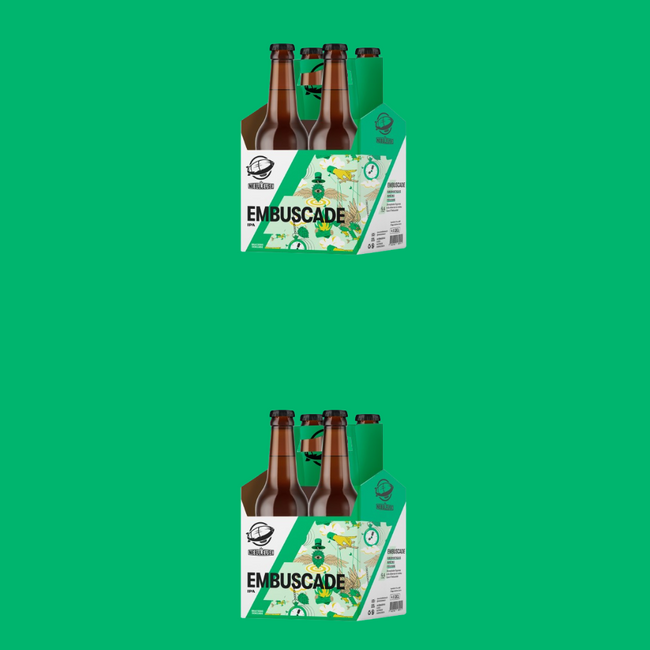
We've been brewing in our tanks in Renens since 2014. Three childhood friends who embarked on this adventure. Gold medal at the European Beer Star in 2021 with our Double Oat . Bronze medal in 2017 with Embuscade . The only brewery in French-speaking Switzerland to win gold at this competition since 2004.
Our best guarantee? We open our doors. Brewery tours , discussions with the brewers, total transparency about our practices. If you want to verify that we really brew what we sell, come and see for yourself.
Swiss craft beer is built on these values. Labels provide reassurance. Transparency convinces.
Cheers 🍻


