

Why is craft sour beer so divisive?
Before the end of the 19th century and the industrial mastery of fermentation, all beers were more or less acidic. Acidity was not a flaw; it was the norm. Laboratory yeasts changed the game, and we collectively forgot that beer once pricked the tongue.
Craft sour beer is therefore not a hipster fad in search of novelty. It's a return to brewing origins, which crystallizes a real debate in the craft community: purists of spontaneous fermentation versus defenders of rapid methods. And it also divides palates, from the very first sip.
The acidity of a sour is intended, not accidental
No, your sour hasn't "gone bad." This is probably the most common confusion: mistaking an acidic beer for a spoiled one. In a sour, the acidity is intentional, produced by bacteria such as Lactobacillus or Pediococcus, sometimes accompanied by wild yeasts (Brettanomyces). It has nothing to do with lemon juice squeezed into the tank.
The result on the palate? A lively but not aggressive sensation, close to biting into a citrus fruit. A sour remains significantly less acidic than lemon juice, enough to surprise the palate, not to make you grimace.
A technical detail that explains a lot: for lactic acid bacteria to do their work, the wort must contain a minimum of hops, as bitterness inhibits their activity, as most brewing manuals remind us. This is why sours are rarely bitter, which can be unsettling for IPA lovers trying them for the first time.
Traditional sours and kettle sours have little in common
Behind the word "sour" coexist two families that are completely opposite, except for their acidity.
Traditional sours take their time. Belgian Lambic, for example, relies on spontaneous fermentation in the Zenne valley, Belgium, where yeasts and bacteria present in the ambient air do all the work. The HORAL, the council of Lambic producers, ensures the preservation of this unique expertise. Brettanomyces Lambicus and Bruxelliensis give it that dry, fruity, almost farmhouse character, while lactobacilli provide the acidity. The process takes several months to several years.
Modern sours play a different tune. Kettle souring allows wort to be acidified overnight with a starter of laboratory-cultured bacteria. Berliner Weisse and Gose belong to this family, although Gose has much older roots, recognizable by its salt and coriander.
Between a night of kettle souring and two years of barrel fermentation, it's hard to claim that we're talking about the same product.
Kettle souring fractures the craft community
This is where it gets passionate. On one side, purists believe that only spontaneous fermentation, with its terroir, time, and unpredictability, deserves the name sour. On the other, pragmatists argue that kettle souring makes the style accessible to thousands of brewers, and thus to millions of drinkers.
The debate is not just theoretical. Modern methods rely on pure cultures selected in the laboratory, which guarantees a consistent result but eliminates the randomness that makes traditional sours charming. It's a bit like the difference between a raw milk cheese and an industrial pasteurized cheese: both provide sustenance, but the experience is not the same.
Moreover, the phenomenon extends beyond the simple craft section in stores: bars and festivals entirely dedicated to sour beers are emerging all over Europe and the United States, a sign that the style has found its audience, even if polarizing.
To start, begin with a Berliner Weisse
If you've never tasted a sour, there's no need to jump straight into a three-year-old Gueuze. Initiation works best in stages.
- Berliner Weisse: approximately 3% ABV, light acidity, very refreshing. It's the ideal entry point, especially in summer.
- Gose: same alcohol range, but with a hint of salt that adds complexity. Perfect for those who find Berliner too simple.
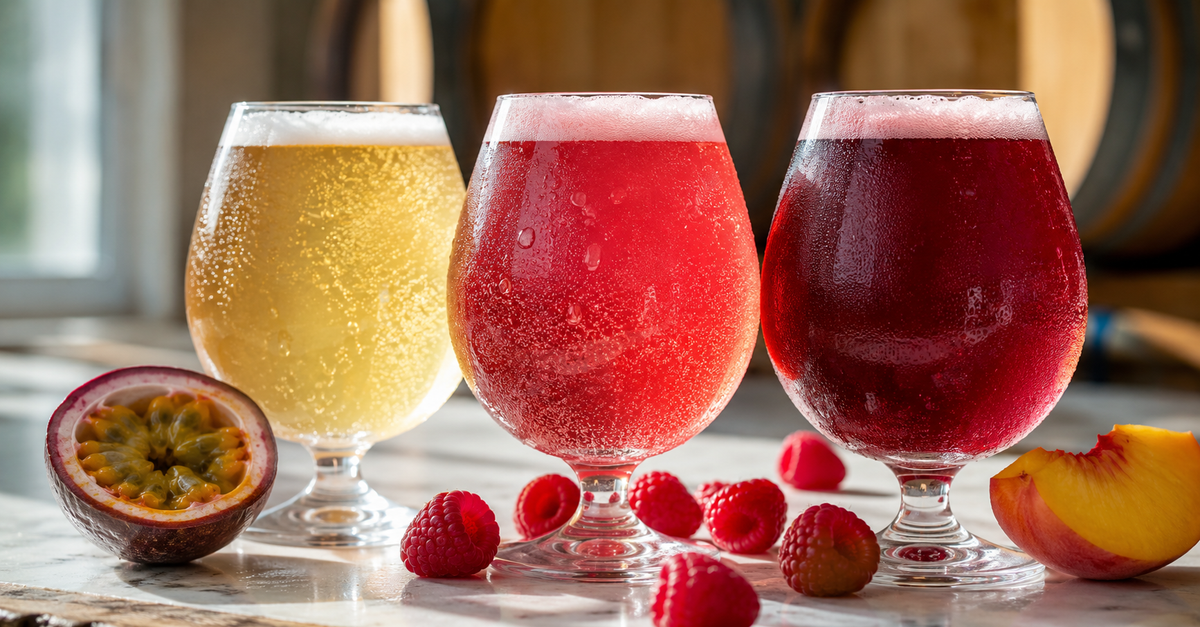
- Fruited sours: the addition of fruits (raspberry, passion fruit, peach) softens the acidity and offers a more gourmet profile.
- Gueuze and Flanders Red Ale: reserved for palates that have tamed acidity. Here, complexity is maximal, combining funk, wood, and controlled tartness.
At La Nébuleuse, we've explored the acidic register with occasional editions, fruity sours where lactic acidity plays with the fruit without overpowering it. If you visit La Tap in Renens, ask what's on tap in terms of sour: it's the best way to test the style without commitment.
And if you come from the world of IPAs, the shock can be harsh. The absence of bitterness is unsettling at first. Take a look at our article NEIPA or West Coast IPA: which to choose when you want hops? to know where you're starting from before switching to the sour side.
Sour, the style that forces you to choose your side
The acidity of a sour is neither an accident nor a fad. It's a precise, controlled brewing choice that dates back long before the invention of laboratory yeasts. The real question isn't "is it good," but rather "what type of sour suits your palate."
The best way to decide is to taste. You can explore the entire La Nébuleuse range from your couch with free delivery for orders over CHF 100, visit La Tap in Renens to try several styles on tap, or even book a brewery tour to understand how these fermentations work from the inside. In any case, you'll quickly discover which side you're on.
Cheers! 🍻


