

How to get started with craft beer?
Twenty names on the screen, styles you don't know, words like dry hopping and IBU looking down on you. Before you dive into craft beer tasting, there's one reassuring thing to know: you don't need to understand everything at once.
Before, beer required no choice: you just drank the same one, period. Craft, however, opens the door to dozens of flavors, and that's precisely where it gets intimidating.
Good news: starting to taste craft beer happens in stages, from the most accessible to the most distinctive, with a specific beer to taste at each step. This allows you to progress at your own pace, without making mistakes, and to know what to try next.
Ale or lager, the only benchmark to remember when starting
Before getting lost in the list of styles, there's one distinction that structures everything else: ale or lager. This is the first major family of beer, and it's based on the type of fermentation, i.e., how the yeast converts sugar into alcohol and aromas.
Ales ferment warm. The yeast works at high temperatures and releases fruity, sometimes spicy flavors. This is the largest and most aromatic family, including IPAs, wheats, and pale ales.
Lagers ferment cold, the yeast settles calmly at the bottom, and the result is crisper, drier, and more refreshing. This distinction between top and bottom fermentation is the cornerstone of beer style classification.
This single benchmark is enough to guide you when choosing. Want something refreshing and easy? Head for a lager. Want to discover more pronounced aromas? Go for ales. No need to memorize all the styles at once; this compass already does most of the work.
One last reassuring point: craft beer is often unfiltered and unpasteurized, which preserves its aromas and character. As a result, it has more body on the palate than industrial beer. Your palate may need a little time to adjust. This is normal, and it's even the whole point.
The four-stage journey to progress without getting lost
The idea isn't to jump straight into a double IPA or an imperial stout. Guides all agree on one point: start light, then move towards fuller-bodied beers, from blondes to amber, brown, and dark beers. Here's how to apply this concretely, glass after glass.
Stage 1, the safe bets so you can't go wrong
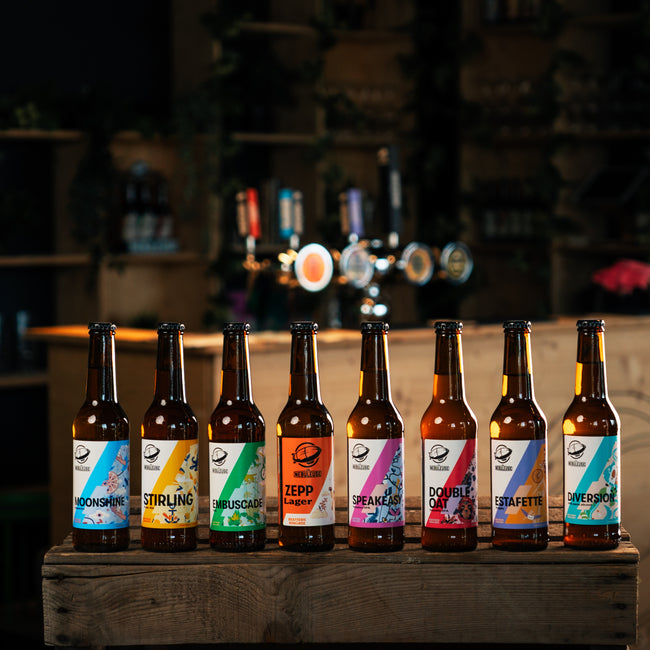
We start with a crisp, refreshing profile, similar to what your palate already knows. A craft lager or a white beer does the job perfectly. On our end, the Moonshine, our white beer in a can, is a gentle first step, light and easy to love.
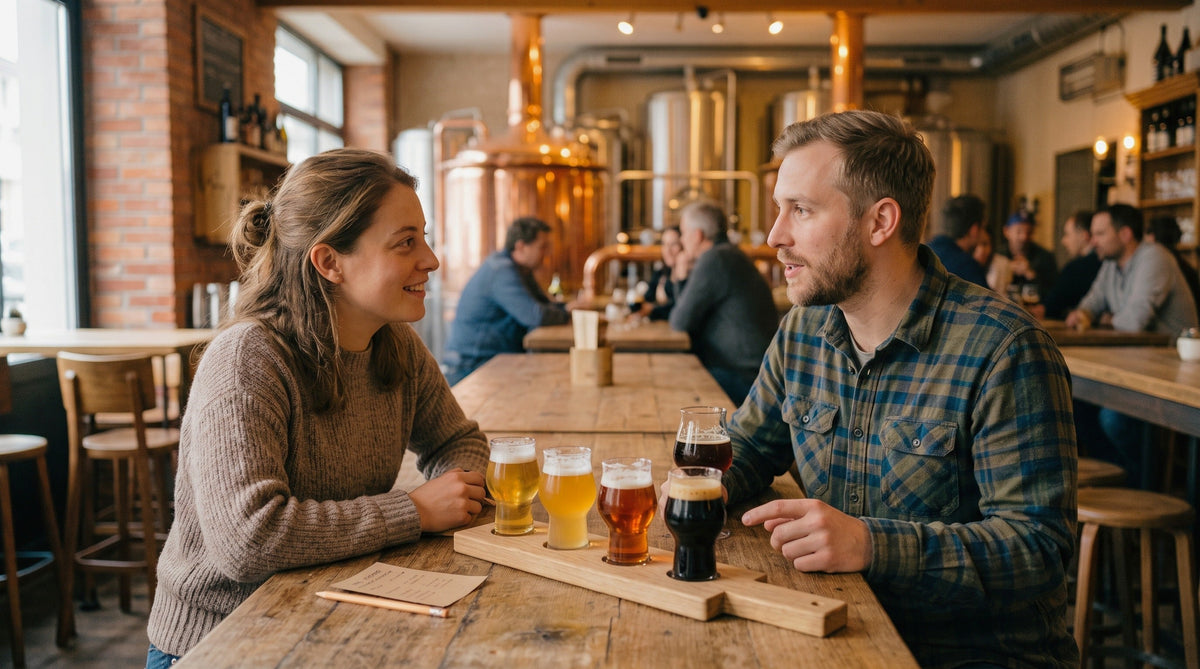
We see it every week at the Tap & Shop in Renens: those who start with a bold IPA often drop out after two sips, whereas a white beer wins everyone over. A little tip from enthusiasts: pour yourself half a glass, or share the bottle with friends. You taste more styles without getting overwhelmed, and you stay moderate. Discovering isn't about guzzling.
Stage 2, the gateway to the world of IPAs
When lager is no longer enough for you, a Session IPA or a light pale ale bridges the gap. Hops, the ingredient that brings bitterness and floral or fruity aromas, make themselves known without ever overwhelming you. The Speakeasy, our light IPA, is perfect for confidently tasting the hoppy profile.
This is when many curious people switch. They thought they hated bitterness, and they discover that, in measured doses, it adds depth and freshness.
Stage 3, more distinctive styles when your palate is ready
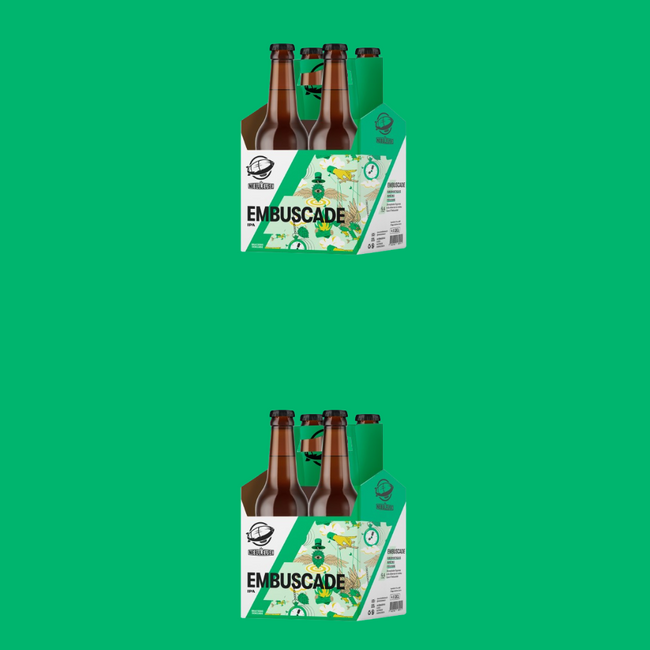
Here, we step it up a notch. A bold IPA or a more pronounced amber offers more bitterness and character. Our IPA Embuscade is the ideal step to confidently reach this stage.
And if it's too much for today, no problem: you can go back. It's not an exam; it's an exploration. No one will blame you for going back to a white beer the next day.
Stage 4, full-bodied styles for days of exploration
The last stage is that of dark beers and stouts, characterized by the roasting of malts, with a denser body and notes of coffee or chocolate. The malt is roasted like coffee, for more or less time depending on the desired intensity: this is what gives these roasted aromas and dark color. The Malt Capone, our dark beer, marks this advanced stage of the journey.
No need to get there quickly. Some develop a taste for it in a few weeks, others never, and that's perfectly fine. Everyone progresses according to their desires.
Tasting isn't about reciting sommelier vocabulary. The first reflex is even purely visual: color. A blonde will be lighter and clearer, while a dark beer will be thicker, with a coffee or chocolate taste. The color already gives you a good idea of what to expect.
For the rest, a simple tool exists: the aroma wheel. No need for the scientific version; it simply helps everyone identify what they perceive. A few broad categories are enough to start naming your sensations: fruity, floral, roasted, spicy.
Vocabulary comes with practice, not all at once. Each glass refines your palate. And if you want to delve deeper into the method, the appropriate glass, and serving temperature, our guide to tasting craft beer like a seasoned sommelier takes you further.
Three ideas to keep in mind, then. The ale-lager distinction as a starting compass. The tiered progression to advance gently. And the fact that putting words to your sensations is learned one glass at a time. Craft isn't an exam; it's a playground.
The best way to test all this is to taste several styles side by side. Our discovery pack brings together exactly what you need to apply the method without going wrong. For the rest, our entire beer collection awaits you, at your own pace.
Cheers! 🍺


