

NEIPA or West Coast IPA, hops are not drunk the same way
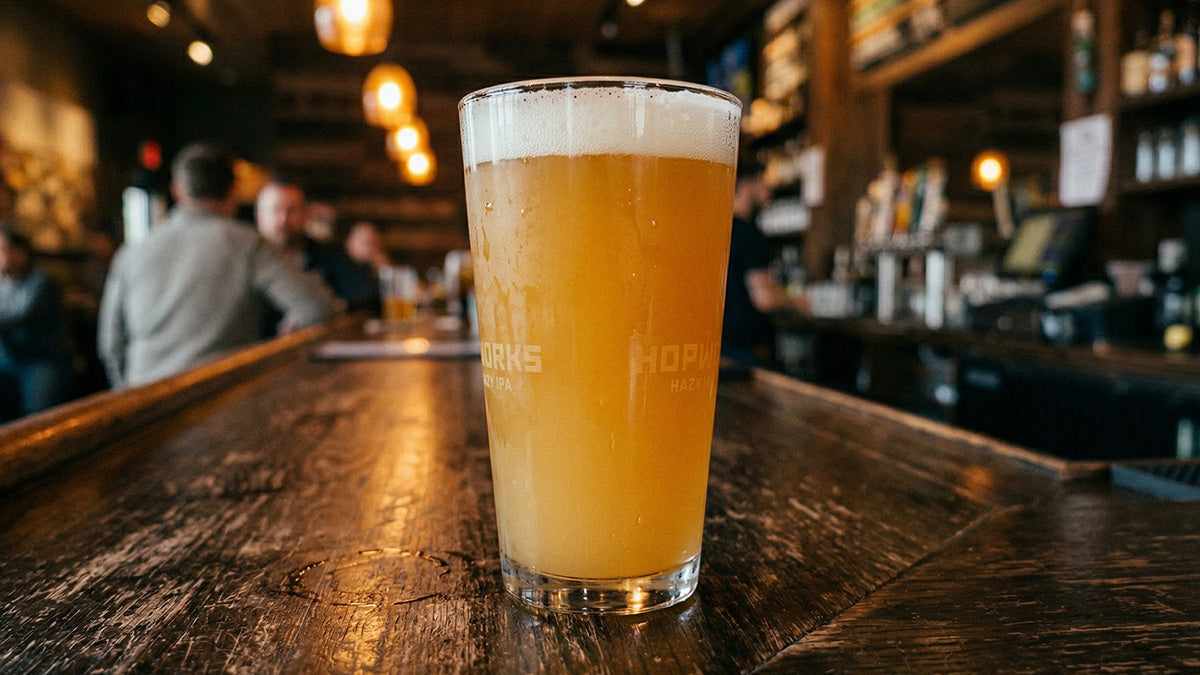
The West Coast IPA invented the American craft movement. Yet, in 2026, it's considered the rebellious choice in bars. The reason? The NEIPA (aka Hazy IPA) has taken over everything. Sierra Nevada and Russian River Brewing now stamp "West Coast" on their labels precisely because they have become a minority.
Both styles are massively hopped, but the hops express themselves in completely different ways. Choosing without understanding this difference is risking disappointment from the first sip.
NEIPA and Hazy IPA refer to the same beer
Have you ever hesitated in front of a craft fridge, wondering if "Hazy IPA" and "NEIPA" concealed two different styles? Good news: they are officially the same thing. The BJCP 2021 guide, the world's beer classification reference, has ruled. Under the entry "Hazy IPA," it explicitly states: "Also known as New England IPA or NEIPA."
The nuance is purely marketing. "New England" refers to the geographical origin of the style, born in Vermont in the early 2010s with The Alchemist's legendary Heady Topper. "Hazy" has become the commercial label that allowed the style to travel beyond the American East Coast.
The paradox? The breweries that founded the style, The Alchemist and Treehouse Brewing, use neither term. They simply write "IPA" on their cans. The NEIPA / Hazy IPA distinction doesn't exist in the glass, only on the label.
NEIPA adds hops after the boil, West Coast adds them during
This is where everything happens. The moment hops enter the kettle determines what you'll taste, and the two styles make radically opposite choices.
The West Coast IPA adds hops at the beginning of the boil. Alpha acids convert into iso-alpha-acids, resulting in a frank and persistent bitterness. The BJCP guide describes the result as "decidedly hoppy and bitter" with a dry finish. IBU: 40 to 70. Typical hops: Cascade, Centennial, Columbus. In the glass, it's crystal clear, sharp, straightforward.
The NEIPA does the opposite. Hops are added in the whirlpool after the boil, then dry-hopped during active fermentation. This timing triggers biotransformation: active yeasts convert essential hop oils into fruity and tropical aromatic compounds impossible to obtain otherwise. IBU: 25 to 60. Typical hops: Citra, Mosaic, Simcoe.
The overlap between 50 and 60 IBU exists on paper, but the perception is very different. The creamy texture of the NEIPA, due to suspended yeasts, softens the perceived bitterness. Brewers also observe that the fruity aromas and gentle bitterness of NEIPA appeal to a much wider audience than classic West Coasts, which explains the style's dominance in craft bars for the past ten years.
A NEIPA should be drunk within weeks of brewing
This is a selection criterion that no one explains to you in stores. The essential hop oils that give NEIPA its mango, passion fruit, and citrus aromas are volatile. They oxidize quickly after bottling, and the beer loses its character within a few weeks.
The DDH (Double Dry Hopping) variant, which involves two successive dry-hopping cycles to intensify the aromas, doesn't change anything. More initial aromas, but the same fragility over time.
The West Coast IPA, on the other hand, ages much better. Its profile relies on structural bitterness and not on volatile compounds. You can keep it for a few months without losing quality. Concretely, when you order a NEIPA from an e-shop like La Nébuleuse's, fast delivery isn't a luxury, it's a necessity to enjoy it at its peak.
NEIPA if you avoid bitterness, West Coast if you want to find it again
The choice boils down to a simple question: what is your relationship with bitterness?
Are you new to craft IPAs and afraid of bitterness? The NEIPA is your gateway. Round texture, tropical fruit aromas, gentle bitterness hidden behind the juice. It's a beer that appeals even to those who swear they don't like IPAs. Standard ABV: 6 to 9%, and up to 10% for Double NEIPAs.
At La Nébuleuse, the Volta, dry-hopped with Citra and Mosaic, perfectly illustrates the profile: mango and passion fruit nose, juicy, almost creamy texture, bitterness that fades behind the fruitiness.
Do you know IPAs and want character? The West Coast has become the choice for connoisseurs tired of the sweet-fruity wave. Dry, clean, with a finish that reminds you why you loved craft in the first place.
La Nébuleuse's Centennial plays this card uncompromisingly: clear golden color, strong resinous bitterness, and a dry finish that calls for the next sip. In 2026, ordering a West Coast at a craft bar is almost an act of rebellion.
For food pairings, the two styles play in different registers. The NEIPA, with its fruity roundness, naturally pairs with creamy cheeses, spicy dishes, and Asian cuisine. The West Coast IPA, drier and sharper, goes well with grilled meats, aged cheeses, and charcuterie. And if you're organizing an event, a tap rental allows you to serve both styles side by side.
To explore these styles firsthand, nothing beats a guided brewery tour with tasting. You taste both side by side, and the difference becomes clear.
Even major Californian West Coast breweries have eventually integrated Hazy into their range. Firestone Walker, a historic pillar of the West Coast style, launched its Mind Haze, embracing a different approach to NEIPA, proving that the two styles are not opposed but complement each other.
NEIPA and Hazy IPA are the same beer under two names. What really changes is the match between NEIPA and West Coast IPA: aroma versus bitterness, roundness versus dryness, ephemeral versus patience. And the best way to decide is to taste.
The La Nébuleuse beer encyclopedia details each IPA in the range, but nothing replaces the moment you raise your glass to compare. Your next round is just a click away, with free delivery from CHF 100.
Cheers! 🍻


