

Launch or kill a beer, the real strategic choice
A craft brewery's most strategic decision isn't how to brew. It's deciding what to launch, and more importantly, when to stop. Paradoxical? Not really. In Switzerland, brewery density is among the highest in the world. Every fermentation tank is a rare resource, every space in the product line a choice that needs justification.
From an idea scribbled on a napkin to the first glass served at the bar, the journey is long, iterative, and often invisible to you as you order your beer. And between a reference that stays in the catalog and one that disappears, there are criteria that most enthusiasts don't even suspect.
A beer never comes out of the first brew
You might imagine an inspired brewer who tests a recipe, tastes it, validates it, and puts it into production. The reality is much more patient. In the craft world, the norm is between 4 and 10 iterations before a beer is deemed ready for the public. Some recipes require several months of development, including internal tasting panels and variable adjustments.
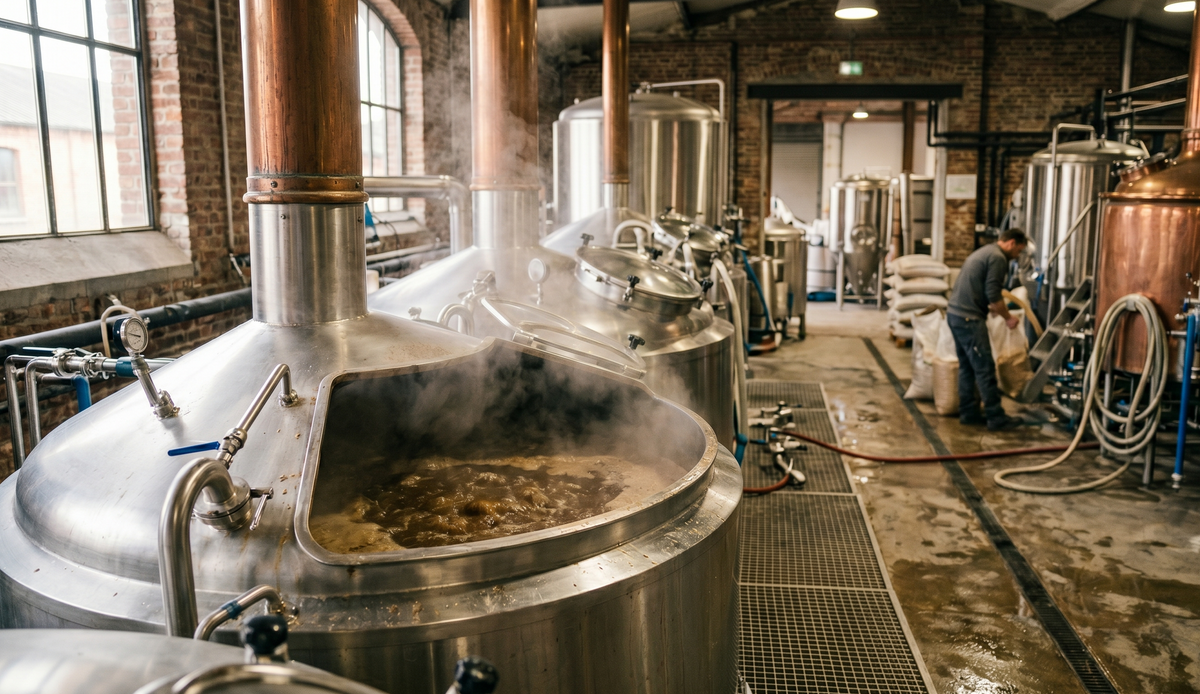
The pilot batch is the first filter. A small volume brewed on a reduced system, allowing an idea to be tested without committing the main production capacity. If the result is not convincing, the cost remains limited. It's better to fail on 100 liters than on 3,000.
But "convincing" doesn't mean "it's good." The real bar is reproducibility. A beer can be excellent on the first try, but if it tastes different on the second or third brew, it's not ready. Each batch goes through systematic quality control before being released, even when the recipe has never been brewed before.
The distinction is fundamental: "it tastes good" is subjective and temporary. "It tastes the same every time" is the condition for a beer to go into production. If you want to understand the technical details of this transition from lab to tank, we have described the entire journey of an experimental brew to production.
What decides that a beer enters the range
Moving from pilot batch to launch means passing through three distinct filters. And the brewer's feeling is only one of the three.
First, the sensory filter. Internal panels taste the beer blind, brew after brew. What they validate is not that the beer is good, but that it is identical from one time to the next. A consumer who buys your beer again expects to find exactly what they liked the first time.
Then, the analytical filter. This is the non-negotiable condition: a beer with a measurable defect is not released, no matter how original it is. No compromise on quality, ever. This systematic control is what separates rigorous craftsmanship from improvisation.
Finally, the commercial filter. The beer must find its place in an existing range and meet a real demand. In Switzerland, some styles saturate craft shelves while other niches remain underexploited. Launching yet another variation of a popular style or exploring a niche territory does not carry the same level of risk.
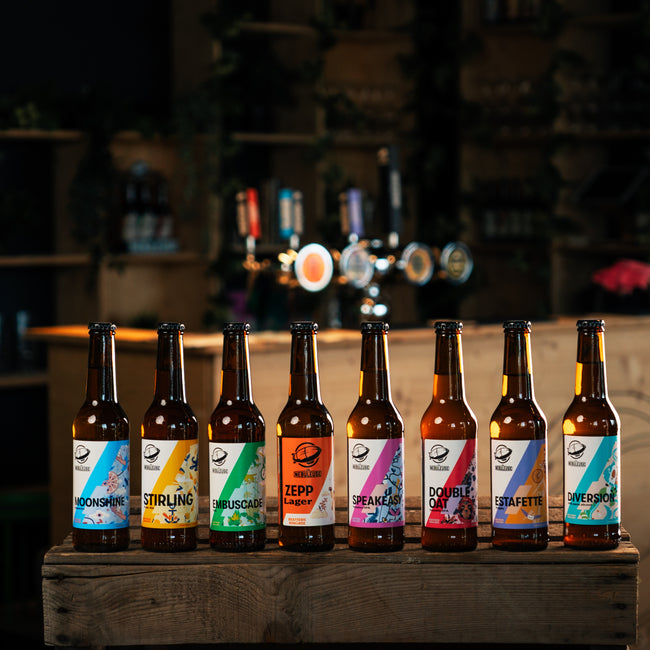
For us, the Double Oat didn't come into existence because a Double IPA was missing from the catalog. It survived this filter because its oat-tropical profile opened up a niche that no one else was covering in the range.
In Switzerland, this consideration carries even more weight. With a market that consumes 4.66 million hectoliters, of which nearly one million are imported from 94 countries, local breweries face direct international competition. Every entry in the range must justify its fermentation slot against all this offer.
Stopping a beer is sometimes the best choice of the year
This is perhaps the least understood decision by the general public. When your favorite beer disappears from the menu, you think of it as a failure. In reality, it's often the most strategic move a brewery can make.
The trap is permanent rotation. Many craft breweries have developed a dependence on novelty: consumers attach themselves to styles rather than brands. This phenomenon is well known in the industry as the "wine-ification" of craft, this tendency where drinkers flutter between novelties like wine lovers between vintages. As a result, breweries that no longer have a stable flagship product are the most vulnerable when trends change.
The intelligent response? Don't kill what works, but build alongside it for new audiences. Preserve heritage while creating for discoverers. It's a delicate balance, but it's one that allows a range to remain both clear and vibrant.
The capacity argument is just as concrete. A liberated fermentation tank means a new gamble is possible. Deciding to stop a stagnating beer means deciding to invest in the next one. And when the craft market goes through phases of contraction, range discipline is no longer an option, it's a condition for survival.
The range is a living organism
So if one day you no longer find your usual reference at the bar or in the shop, tell yourself that it's probably so that something better can exist. Each stop frees up a tank, each launch has survived the three filters. This is the daily craft philosophy: not just creating, but knowing when to let go so that the range remains alive.
The result, you can see for yourself. All the beers that made the cut are on our e-shop (free delivery from CHF 100). And if you want to see where these decisions are made, book a brewery visit in Renens or rent a tap to test the survivors at home.
Cheers! 🍻


