

Choosing Your Craft Beer Wisely
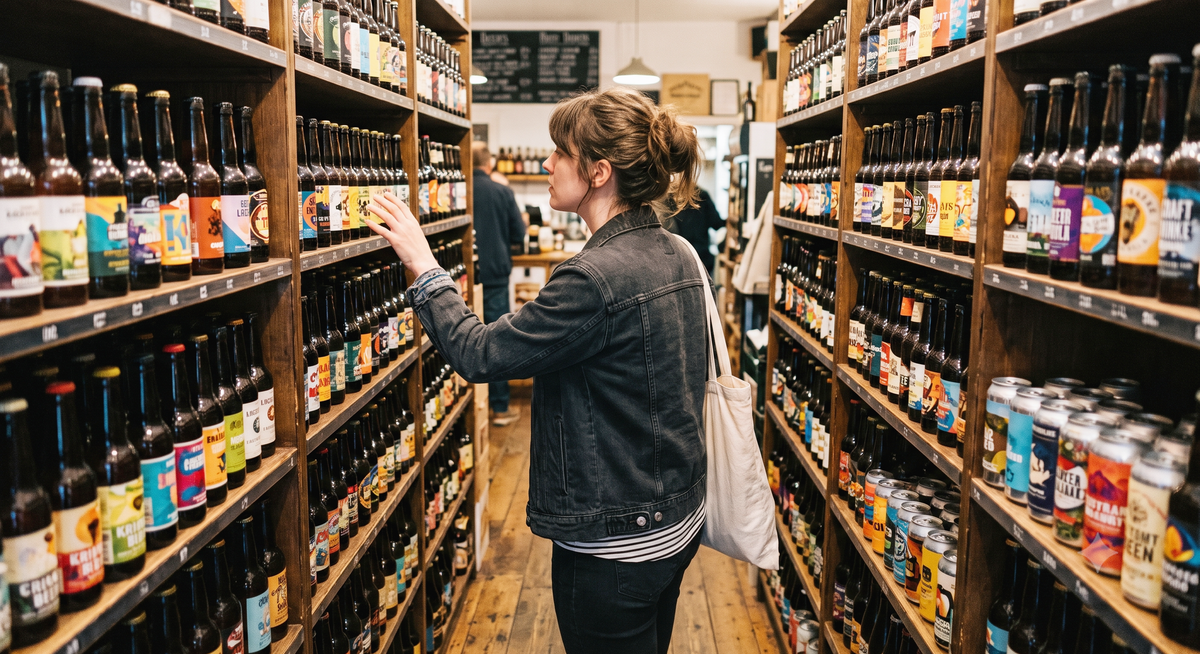
A dozen bottles lined up, names you've never seen, percentages climbing from 3 to 9%, and that little voice telling you you're bound to make a mistake.
Imagine the scene, standing in front of a shelf or scrolling through an e-shop: your finger hesitates, your eye jumps from one label to another. This is the moment when many curious people grab the one they already know, just to play it safe.
Good news: choosing a craft beer doesn't require you to speak like an insider. No need to memorize every style or decipher every number on the label. You just need three simple reference points—the taste you're looking for, the occasion, and the intensity—to find your way, whether for yourself or as a gift. Here's how to choose your craft beer without jargon.
What truly distinguishes craft from industrial
A matter of scale and independence, not just labels. We often think that "craft" is just a word placed on a bottle to justify a price. In reality, it's a verifiable way of doing things. The Brewers Association defines a craft brewer by three concrete criteria: small production, real independence from alcohol giants, and genuine brewing work.
For us, that translates simply. We brew, bottle, and ship from a single site, Chemin du Closel in Renens. You can know who makes your beer, where, and how.
That's the fundamental difference with industrial beer: not a vague story of authenticity, but a complete cycle you can see with your own eyes during a visit. If you want to understand what makes a true Swiss craft beer, we also explain labels and independence in detail.
Innovation as a true hallmark. Where a factory repeats the same recipe on a very large scale, a craft workshop seeks something else. The Brewers Association states it clearly: the signature of craft is innovation, reinterpreting historical styles with unique twists and inventing new styles.
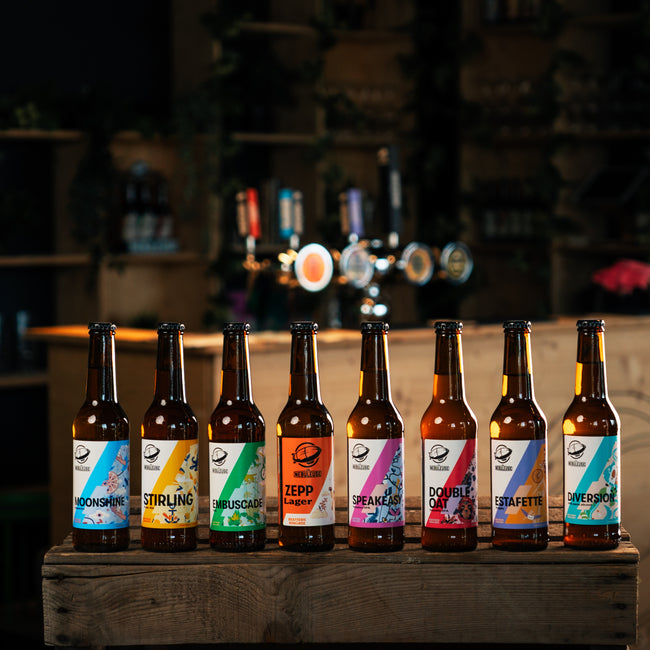
As a result, you'll find an IPA, a Pale Ale, a wheat beer, non-alcoholic, gluten-free, and sometimes collaborations like the Diversion Blanche signed by Danny Khezzar. This variety is not a trap to avoid. It's a playground to explore, and that's precisely what makes the choice interesting.
Choosing your beer according to the taste you're looking for
Before getting bogged down in numbers, start with what you already like. This is the most reliable guide to direct you towards a taste family rather than an impressive-sounding style.
- If you like citrus juices and a distinct hint of bitterness, a Pale Ale like the Stirling is a logical entry point, with its grapefruit and lychee notes.
- If you're looking for the simple freshness of a lager, the Zepp bridges the gap between your usual beer and the craft world, without disorienting you all at once.
- If round, slightly spicy profiles appeal to you, a white beer like the Moonshine opens a completely different door.
The simplest way to get an idea is to browse the entire range and identify the families that speak to you.
Don't confuse hoppy with bitter. This is the reflex that trips up many beginners: believing that a very hoppy beer will necessarily be aggressive on the palate. This is false, and it deserves our attention. The perception of bitterness also depends on residual sugar and the body of the beer, not just the amount of hops.
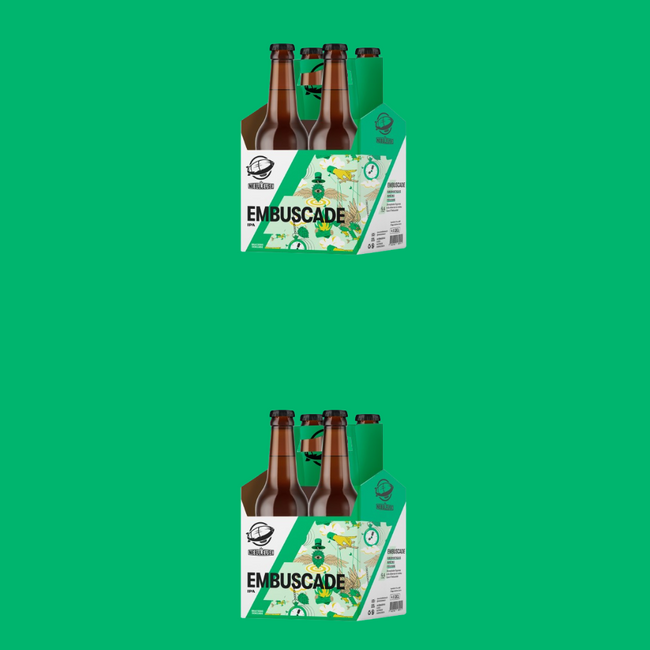
Take the Embuscade, our IPA awarded at the European Beer Star. It is distinctly hoppy, but its blood orange notes and tropical aromas balance the whole. Hops bring aroma as much as bitterness, and it's this balance that matters, not the word "IPA" on the label.
Navigating alcohol and IBU without making it a science
Two numbers intimidate more than all the rest: the alcohol percentage and the IBU. These are useful reference points for comparison, never verdicts on what you'll experience on the palate.
Alcohol content, a contextual reference. A lighter beer like the Speakeasy at 4% is no less crafted than a full-bodied beer. It's just a profile designed for other moments, an extended aperitif, for example.
The percentage mainly helps you gauge your evening and drink in moderation, not to judge if a beer is "worth it." A well-brewed light beer might please you more than a big 9% one.
IBU, a number that doesn't tell the whole story of the sensation. IBU measures the concentration of bitterness from hops. To give you some benchmarks, the Brewers Association style guidelines place a lager around 10 IBU, a classic IPA between 40 and 60, and a double IPA beyond 60.
But be careful not to read this number as a difficulty rating. These same guidelines remind us that perceived bitterness can differ significantly from the measured IBU. A sweeter, higher-alcohol beer softens the bitterness; a very dry beer accentuates it.
In other words, a high IBU is not a death sentence: it's a point of comparison between beers, not an obstacle to overcome. If you want to delve into the logic of styles, our encyclopedia details each recipe with its real numbers.
Adapting your choice to the occasion, without forgetting non-alcoholic and gluten-free options
The third axis is context. Again, no mystery: the moment guides the choice as much as the style.
Choosing according to the moment. An aperitif with friends calls for a light, refreshing beer, like a Zepp or a Speakeasy. A more substantial meal can accommodate a fuller-bodied beer that stands up to the dishes. And when you're giving a gift, think first of the person receiving it rather than the style you prefer. A beer you like isn't necessarily the one that will please the recipient.
Non-alcoholic and gluten-free are not separate categories. We still tend to think that a non-alcoholic beer is a substandard beer, and that gluten-free necessarily sacrifices taste. Brewing practice proves otherwise. Our non-alcoholic Diversion IPA is brewed with real dry hopping to preserve the aroma; it's not a compromise but a beer designed for its taste.
The same logic applies to gluten-free. The Stirling became gluten-free in 2023 while maintaining its Pale Ale recipe, with each batch tested below 5 ppm. Dietary restrictions don't force you to sacrifice anything. These two references allow you to include everyone around the same table, and the article on non-alcoholic beers reinvented by craft explains in detail how we achieve this.
Three keys in hand, the rest is learned by the glass
Remember the essentials: you choose primarily by the taste you're looking for, then by the occasion, and then you refine with intensity. Percentage and IBU are benchmarks for comparison, not verdicts on your palate. And non-alcoholic and gluten-free are as legitimate entry points as a classic style, never second choices.
The best way to learn is to taste. That's exactly why the discovery pack exists: several styles from the range in a single order, so you can form your opinion without betting on just one bottle. You then sort out what speaks to you, and you come back to your favorites. If you have a question before you start, write to us directly; we're here to guide you.
Cheers! 🍻


